Category
Built by
Agentic Workflows
Vendor Verification
Vendor Verification uses agents to validate inputs, execute steps, escalate exceptions for human review, and record results in systems.
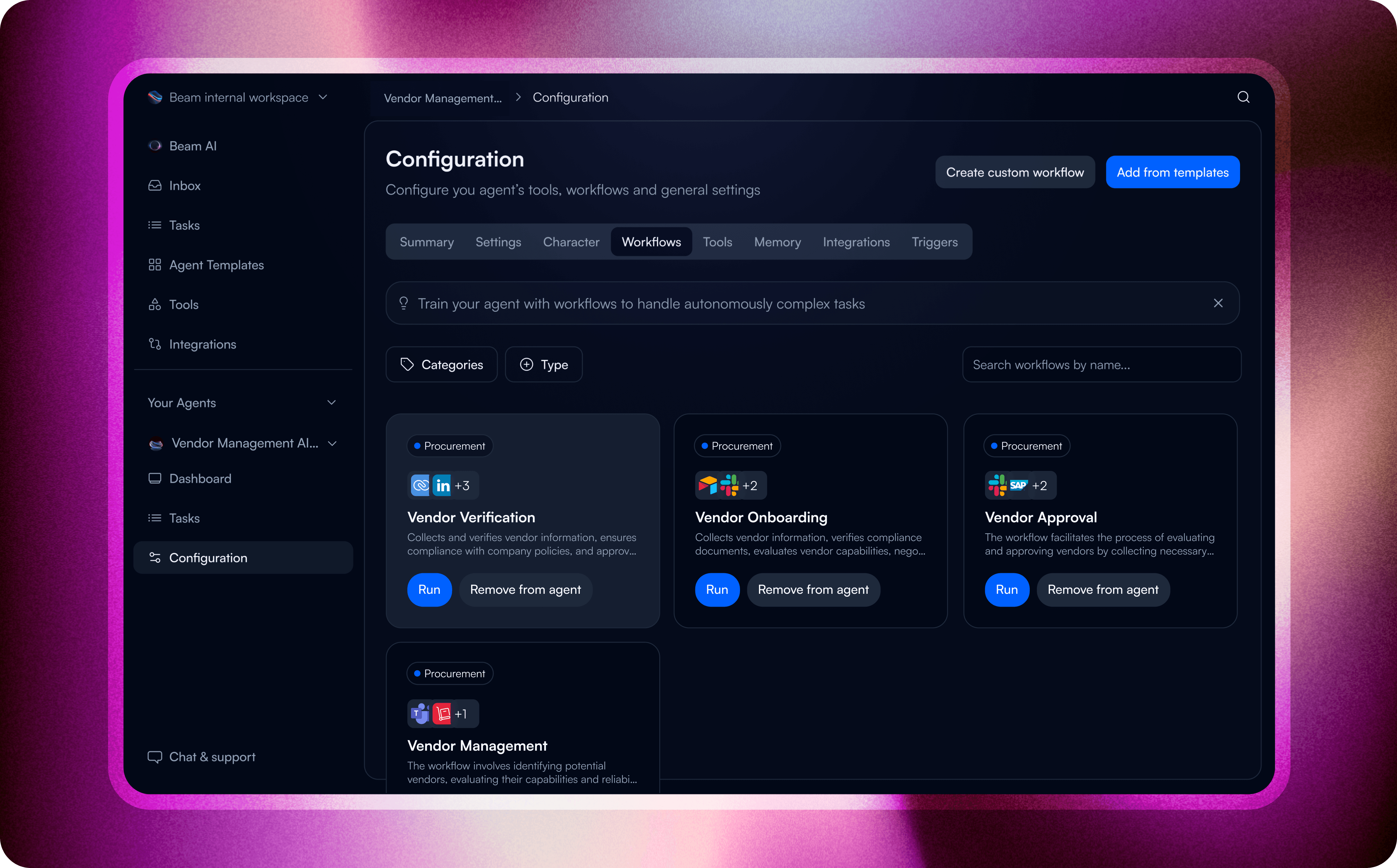
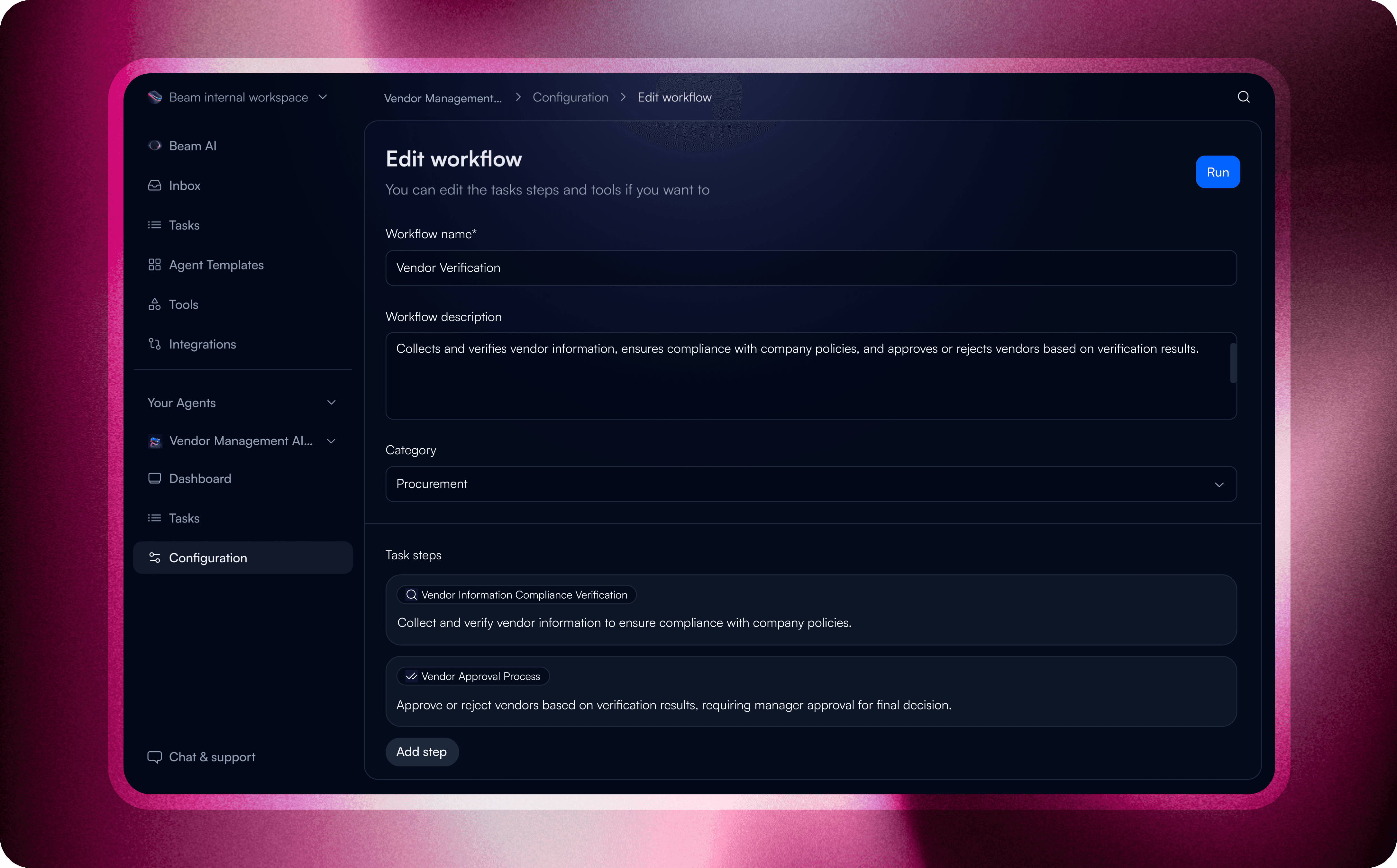
The vendor verification workflow automates the vendor verification process, using AI agents to validate credentials, review compliance records, and manage onboarding activities. This ensures vendor data remains accurate and up-to-date, reducing risks and fostering reliable partnerships.
By leveraging agentic process automation, businesses can enhance onboarding speed, maintain compliance with organizational policies, and minimize manual effort. This workflow is particularly valuable for industries such as procurement, manufacturing, and logistics, where trust and compliance are key to successful operations.
Thorough vendor verification is crucial for ensuring compliance and establishing strong partnerships. Automating this workflow enables businesses to validate vendor information effectively and efficiently.
Here are some use cases where this workflow can be applied:
Vendor Verification is managed as a bounded compliance & risk process. It begins with an approved request and ends only after the result, status, exceptions, and required follow-up are recorded by the responsible legal owner.
Trigger
Vendor Verification starts when the legal owner receives a qualifying request or record. It proceeds after the data and access needed to collect vendor credentials and compliance documents from the database are available.
How it works



Inputs and connected systems
Required inputs include the source request or record, the fields and documents needed to collect vendor credentials and compliance documents from the database, reference data for later validation, and approved access to each destination system.
Human decisions and exceptions
The Legal owner reviews missing information, policy exceptions, low-confidence results, and actions that change the final compliance & risk outcome. Approved cases continue; rejected cases return for correction or manual handling.
Controls and audit considerations
Vendor Verification should use least-privilege access, required-field validation, auditable decision and write logs, and a stop condition when data is missing or confidence is below the approved threshold. The process owner defines retry, escalation, privacy, and rollback rules before release.
Outputs and stopping point
The workflow ends after the final approved action: Notify relevant teams. It writes the validated result to the approved system of record, records the outcome, and notifies the responsible owner when follow-up is required.
Participating Beam agents


Related workflows
Explore workflows that share this process, function, agent, or industry.