Comparison
UI Path vs. Beam AI: Which is better?
Choosing between Beam AI and UiPath is ultimately a question of where you are on the journey from scripted automation to adaptive AI agents. In a comparison, UiPath represents a mature RPA and business automation suite that has expanded into agentic automation, while Beam AI is built natively around AI agents and agentic workflows. Developers and architects who grew up with bots, queues, and orchestrators now need a platform that treats agents, tools, and context as first-class citizens. This guide walks through how both platforms approach building, running, and improving automation so you can decide which is the better fit for your stack.
Comparison
What Is the Key Difference Between UiPath and Beam AI?
UiPath: UiPath is best known as a leading RPA and business automation suite that orchestrates software robots, workflows, and AI services across desktop, web, and enterprise systems.
Beam AI: Beam AI is an agentic automation platform that lets enterprises design, deploy, and govern artificial intelligence across customer service, operations, and back-office workflows, with AI Agents at the core of the platform.
Capabilities
Capabilities Of Both Platforms
Both platforms help enterprises automate complex work, but they come from different lineages:
Building and Operating AI
UiPath automations are typically designed in Studio tools, combining RPA flows with AI components like document understanding and ML models; newer releases add agentic constructs, but robots and task scripts still dominate.
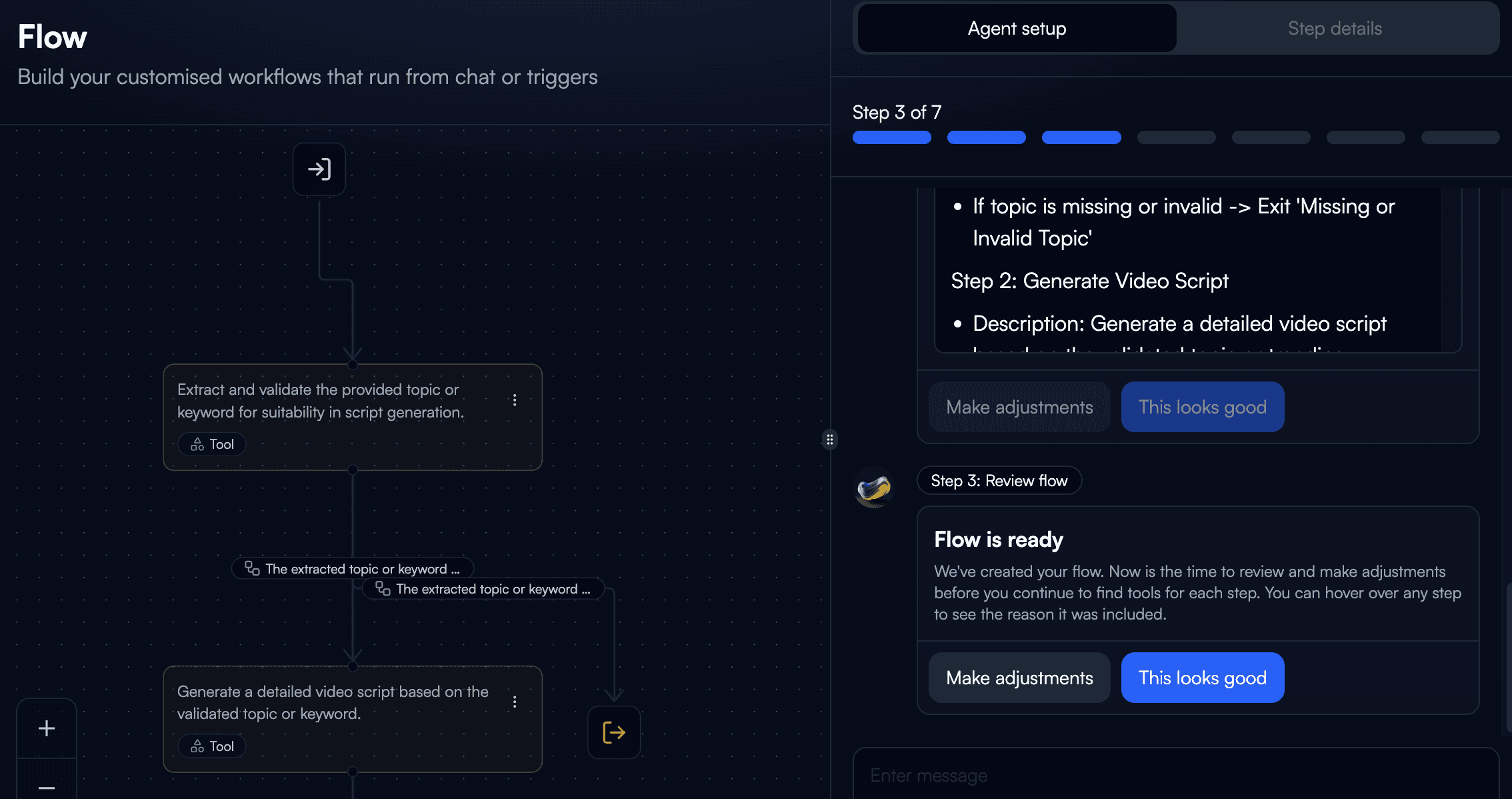
Beam AI treats AI agents as the main building block: teams define purpose, tools, and escalation paths, then wire them into agentic workflows, with creation, orchestration, memory, and integrations in a single platform for cross-domain deployment.
Improvement over Time
UiPath provides monitoring, analytics, and AI features that retrain models or refine flows, enabling incremental improvement in high-volume RPA scenarios.
Beam AI embeds observability and evaluation directly in the agentic layer, so teams can inspect traces, replay scenarios, and evolve prompts, tools, and routing strategies while staying aligned with enterprise governance.

Integrations and Ecosystem
UiPath offers a broad connector marketplace for enterprise apps, desktops, and legacy systems, particularly strong where UI automation and classic RPA are still needed.
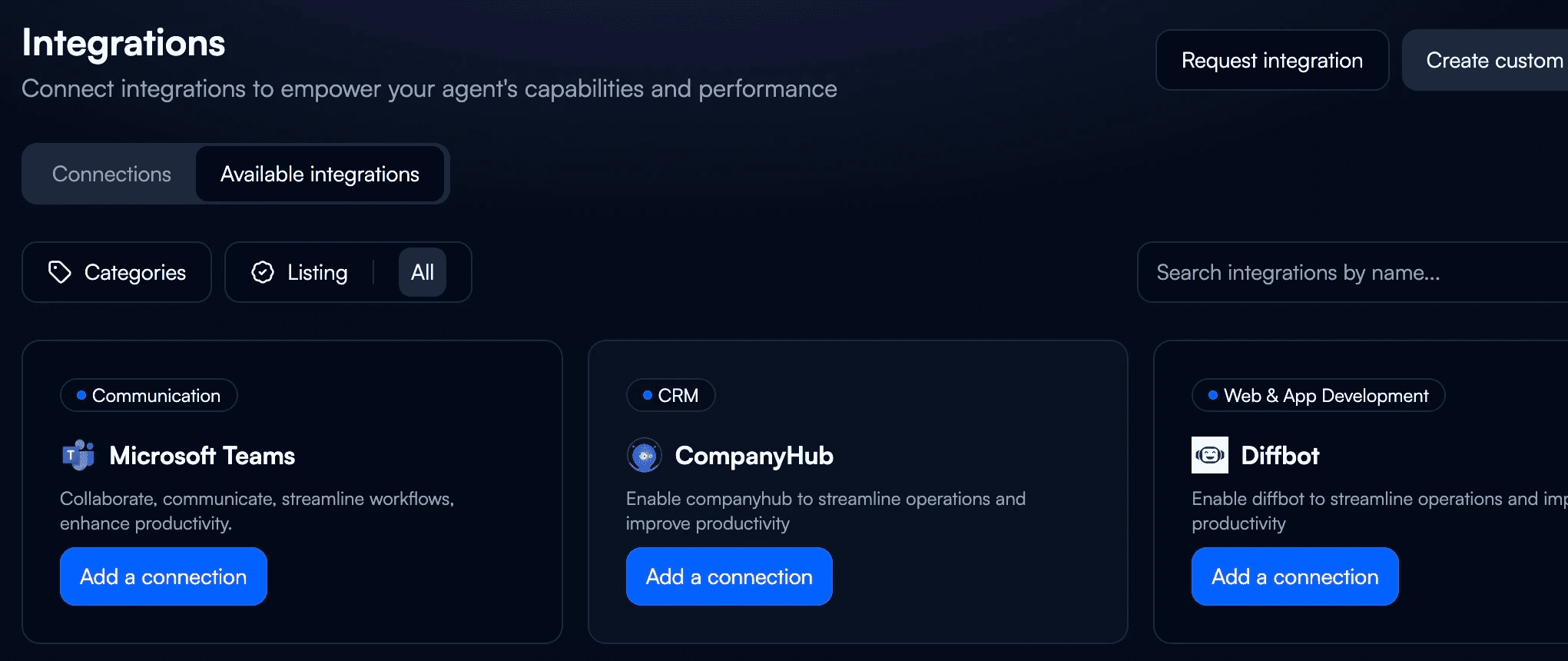
Beam AI emphasizes API-level integrations for AI agents with tools like Slack, Zendesk, Salesforce, and Shopify, as shown in the Integrations hub, and Agentic Insights explores how to extend those agents into real-world operations.
Time to First Deployment
For UiPath, time to first deployment is fastest when organizations already run RPA and can extend established practices; new teams must first learn Studio, robot management, and orchestration.
Beam AI is built for fast start: agent templates, an agentic workflow builder, and a unified control plane help teams move from idea to working quickly, then harden flows with custom tools, memory strategies, and evaluation as they scale.

Security and Compliance
UiPath positions itself as an enterprise automation provider, with certifications, governance controls, and deployment options that keep robot and AI activity auditable and compliant.
Beam AI centralizes oversight with role-based controls, logging, and audit trails for every action; security and compliance teams can see data access, tool permissions, and escalation paths in one place, with more detail on our Security page.
Capabilities
Pricing Overview: Beam AI vs. UiPath
UiPath typically follows a licensing model based on named users, robot capacity, and product tiers which bundle different capabilities into fixed packages. This matches traditional RPA procurement, where organizations forecast robot volumes and allocate automation budgets around them.
Beam AI takes a more flexible, value-based approach. Rather than forcing every team into the same tier, Beam evaluates each agentic automation use case individually, so customers pay in line with actual workloads and the complexity of their integrations and models. This aligns naturally with agentic automation, where volumes and model usage can vary significantly across processes without needing to redesign the commercial structure every time.


Comparison
Which Platform Fits Your Workflow?
If your organization already runs large-scale RPA programs, depends on desktop automation, and wants to extend that foundation with AI, UiPath offers a robust, familiar ecosystem. It is particularly compelling where legacy systems and UI scripting remain central to the automation strategy.
If you are designing net-new automation, want AI agents that can reason across systems, and prefer a platform that treats agent orchestration, memory, and integrations as core building blocks, Beam AI is likely a better fit. It gives you an opinionated but flexible environment to build, run, and refine artificial intelligence that sit at the heart of your operating model while staying aligned with enterprise security and governance expectations.
To explore how our concept could map to your specific workflows, you can request a tailored walkthrough of the platform.