Platform
Beam AI vs ChatGPT
Choosing between Beam AI and ChatGPT comes down to what you want to build and run: developer-first chat tools or a production-grade agentic platform that operates end-to-end processes. ChatGPT excels at conversational assistance, document Q&A, and task support within a powerful chat environment. Beam AI focuses on AI automation through configurable AI agents that execute multistep, cross-app workflows with centralized oversight and controls.
The result is a different operating model: chat versus agentic workflows, which are purpose-built for business processes.
Comparison
What Is the Key Difference Between Anthropic and Beam AI?
Both of these address automation, but from opposite directions. While ChatGPT is a chat interface for individual and enterprise use, Beam AI focuses on an agentic platform built to deploy and manage AI agents that run operational workflows.
ChatGPT: A conversational, everyday workspace for individuals and enterprises. It offers connections to tools like Google Drive, SharePoint, and GitHub. For Business, Enterprise, and Edu tiers, OpenAI states it does not use business data (including connector content) to train models by default.
Beam AI: Beam is an agentic platform made to create, deploy, and govern AI agents that run end-to-end business processes across systems. Teams can take advantage of multi-agent orchestration, ready-to-use templates, and AgentOS—a neurosymbolic layer designed for reliable reasoning and flow control—alongside an operations hub for observability, policy, and audit trails. Native integrations (e.g., Slack, Salesforce, Zendesk, Shopify, Confluence, GitHub) let agents read, write, and act without custom glue.
Capabilities
Capabilities Of Both Platforms
Below we compare practical evaluation criteria that matter in production: how you build agents, how they improve, how they connect, how fast you can ship, and how oversight and security work.
Building and Operating AI
Your team prototypes in ChatGPT using prompts, Custom GPT, and built-in connectors, then operates within an enterprise workspace.
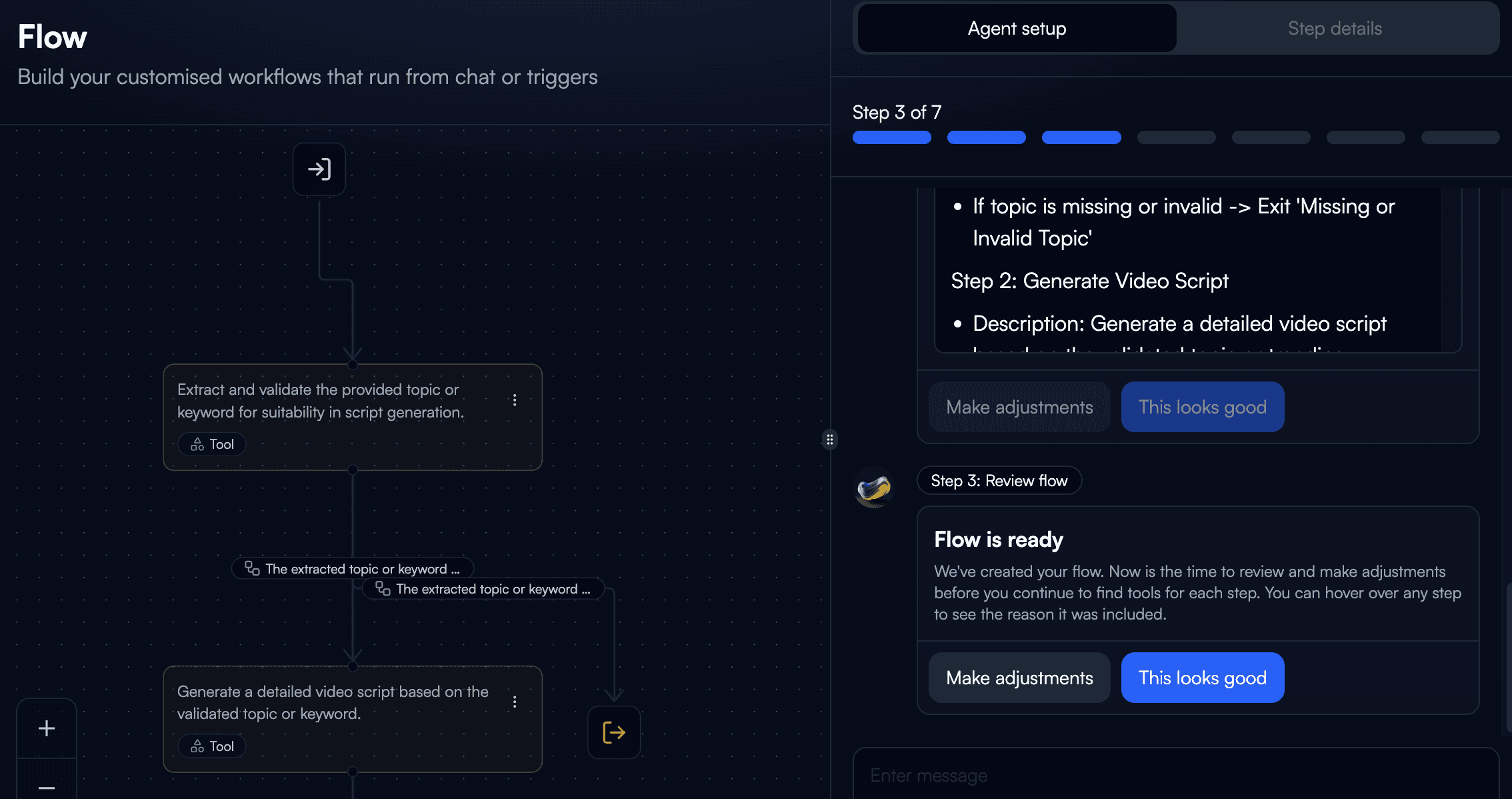
Beam AI lets your team design their own, individual AI agents and makes them available as reusable units. They orchestrate multi-agent flows and manage them centrally via AgentOS and templates visible on the platform homepage.
Improvement over Time
ChatGPT provides workspace controls and updates to models and connectors. Their iteration typically happens through prompt refinements and updated GPTs within the chat environment.
Meanwhile, Beam AI emphasizes continuous operations for agentic workflows with centralized management to adjust agent logic, policies, and flows in one place, supporting ongoing optimization of end-to-end processes.

Integrations and Ecosystem
ChatGPT offers first-party connectors to common enterprise systems like SharePoint, Google Drive, and GitHub, with admin-managed sync and policies.
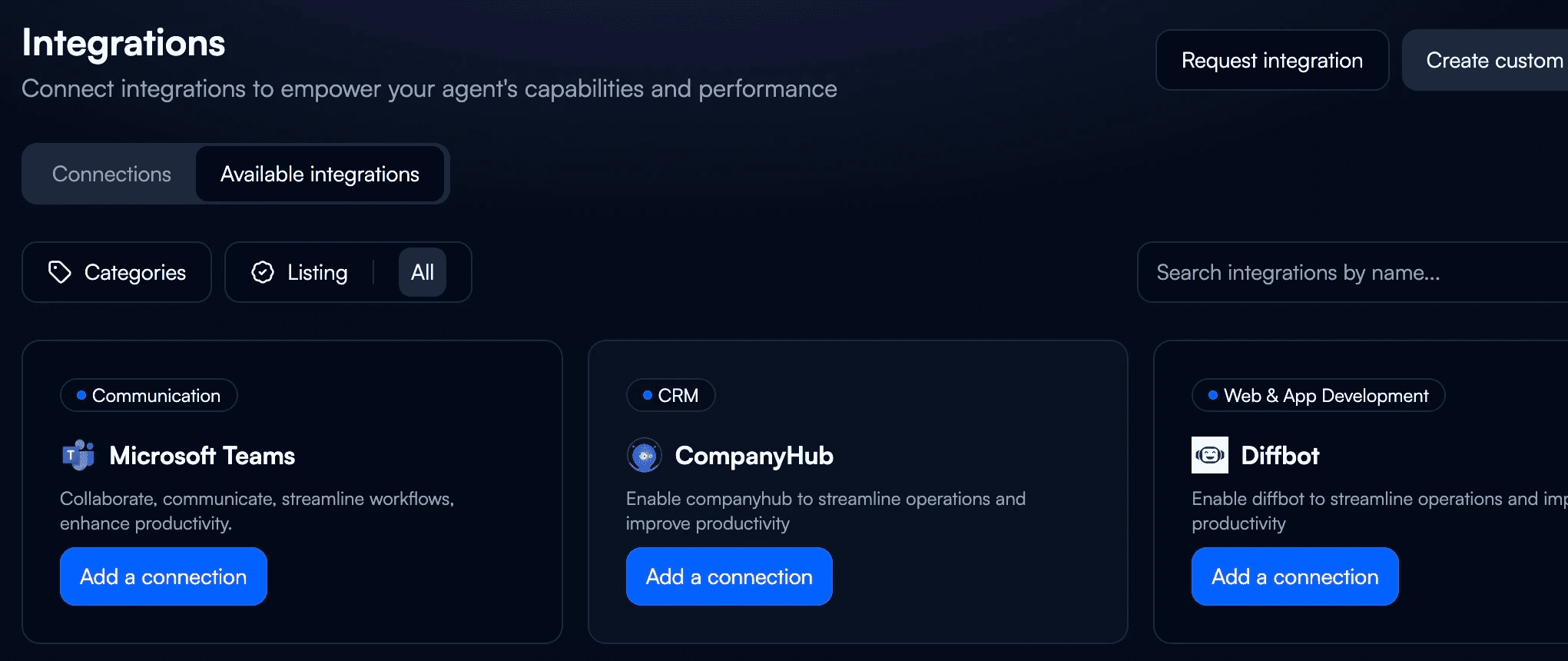
Beam AI provides native integrations so AI agents can read, write, and act across tools. For more details, read into the integrations catalog.
Time to First Deployment
ChatGPT can be productive immediately in the user’s chat, and teams can benefit from their custom GPTs quickly.
Beam AI accelerates first deployments with AI Agent templates and onboarding demos so you can map a workflow and move to execution with minimal glue code.

Security and Compliance
When it comes to ChatGPT, OpenAI states that enterprise data is not used for training, with enterprise-grade security and control over company data via policies and connectors.
Beam AI centralizes oversight for AI Agents, aligns with enterprise data-handling expectations, and documents encryption standards such as AES-256 at rest and TLS in transit alongside breach-handling protocols. Review Beam’s security page for details.
Pricing
Pricing Overview: Beam AI vs ChatGPT
ChatGPT uses plan-based pricing for business and enterprise, with features like connectors and agent capabilities bundled by workspace tiers.
Beam AI takes a flexible, value-based approach: organizations size their plans to the process and throughput they need, with examples on solution pages and usage-aligned starting tiers. This fits agentic automation, where workloads, integrations, and model choices vary by process. See examples on solution pages for startups and use-case landing pages.
Usage
Pay according to the number of tokens you consume; makes it easy to scale usage.

Custom
Know your usage, task frequency and volume? Create your bespoke plan with our help..

Comparison
Which Platform Fits Your Workflow?
Choose ChatGPT if your team mainly needs a powerful chat interface with enterprise controls to help with research, writing, analysis, and ad-hoc task support.
Choose Beam AI if you are ready to standardize AI automation across systems with AI Agents that execute repeatable, auditable workflows. It is the right choice if you want centralized governance over how those agents behave and improve. For a deeper dive into agentic approaches, explore Beam’s Agentic Insights.