Hootsuite is a social media management platform for social media teams, organized around social profiles, posts, messages, and analytics. The vendor documentation defines the resource model and required permissions. Begin with one named object, one responsible owner, and a reviewable next step. Use the Beam catalogue entry as a starting point, then confirm connector actions and event coverage before rollout
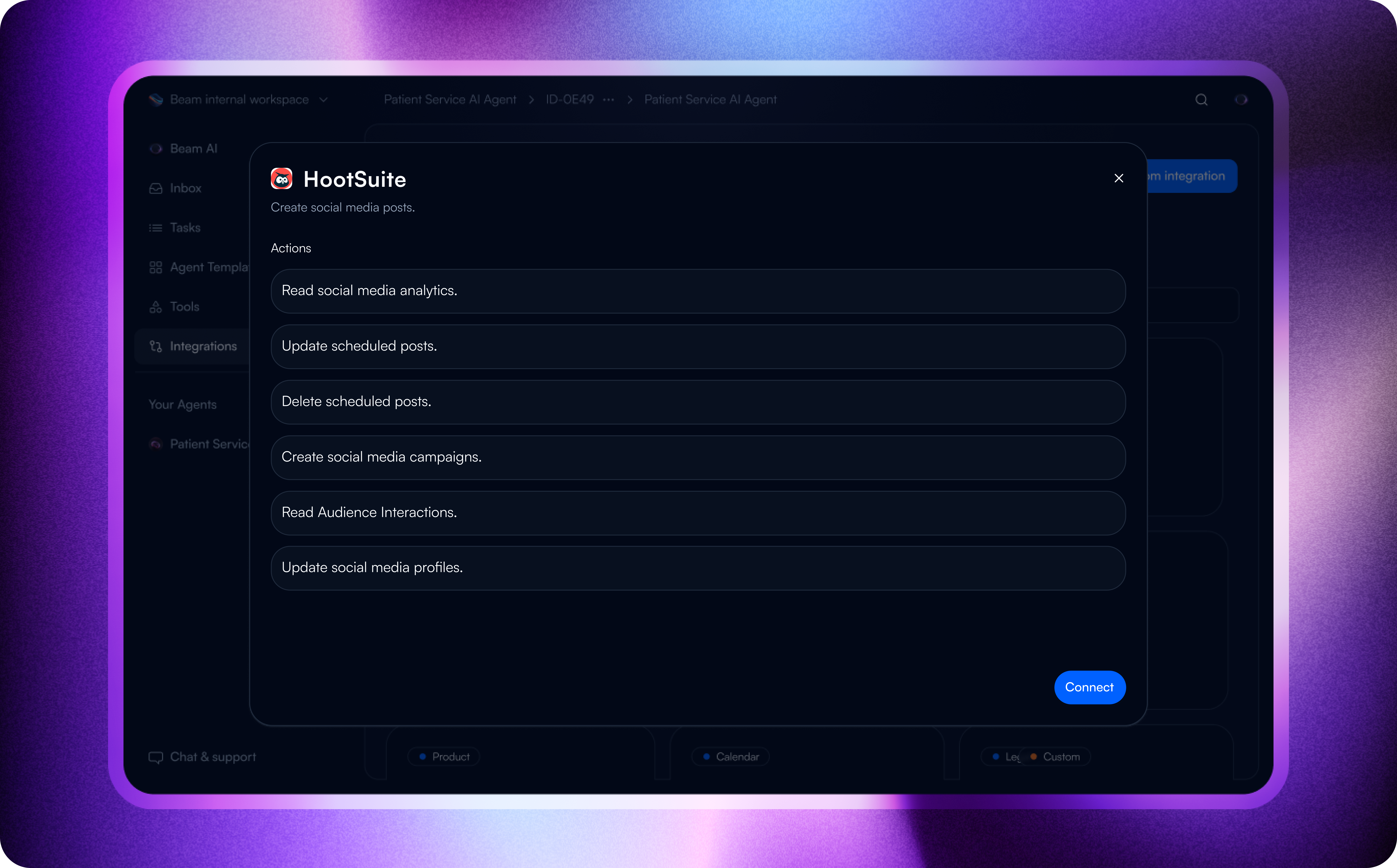
What the integration covers: Hootsuite
Hootsuite is a social media management platform used by social media teams. The official developer documentation identifies social profiles, posts, messages, and analytics as part of its working model. A practical first design is to choose one record type and make the owner and decision visible. For Hootsuite, separate a social profile, scheduled message, and analytics result before assigning the next content action
A practical first workflow
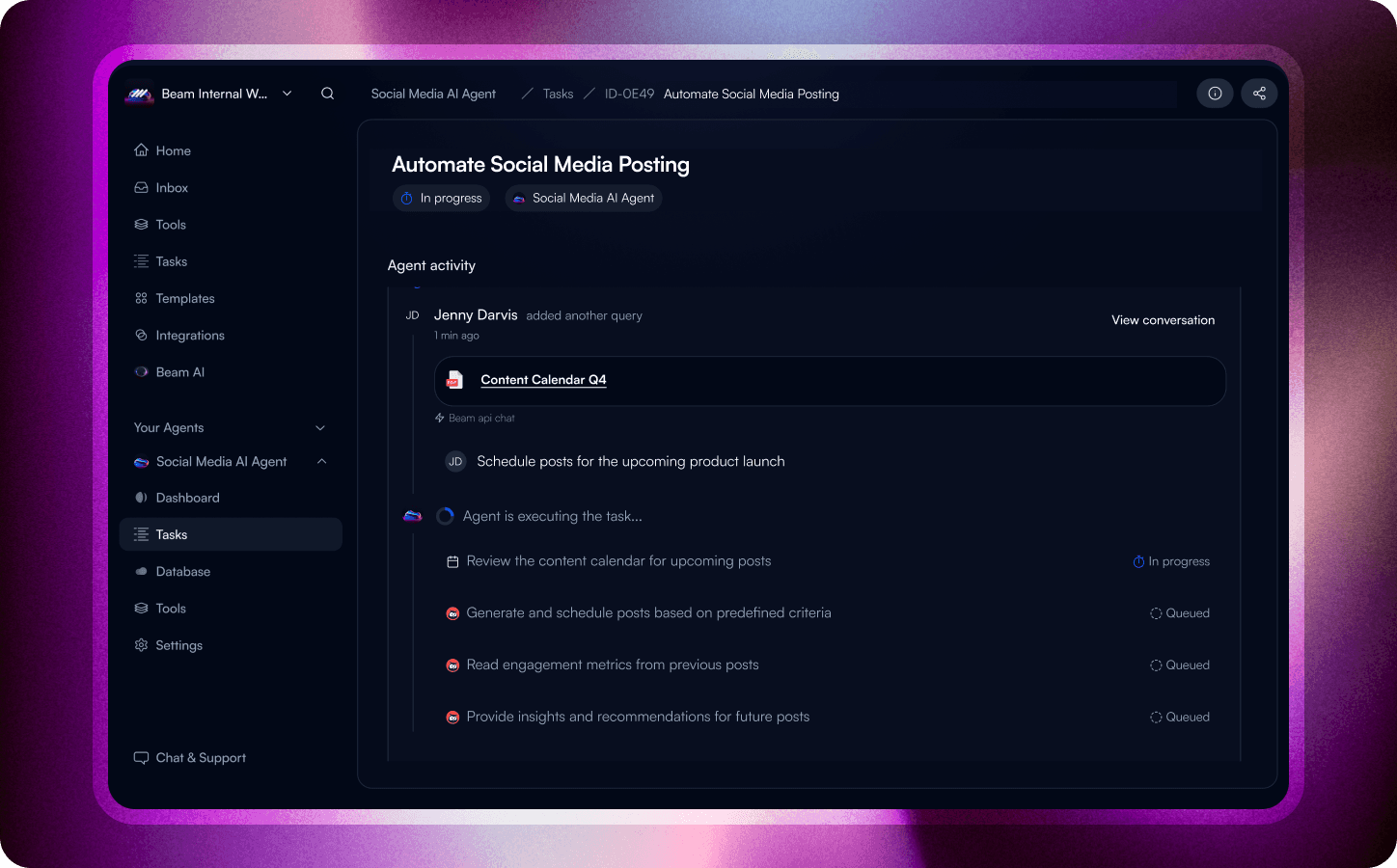
Map a social profile record is created, updated, or ready for review to a documented decision involving social profile. Confirm that the connector exposes the required fields and event, pass only the necessary context to Beam, and define the permitted next action. Keep a human in the loop for exceptions, permissions failures, and decisions that the source documentation does not cover
Workflow patterns to validate
Start with a social profile record is created, updated, or ready for review. Test whether the connector can pass the required social profile fields to Beam; apply an approved rule, then return the next step to the named owner.
For a social profile that needs review, validate the event and write-back path before using Beam to prepare a notification, task, or exception review.
Operational value
A bounded first workflow with a named owner and a clear stopping point.
A more useful record of what was checked, decided, and handed off.
A safer rollout path for exceptions that still require human judgement.
Before you build
Check the connector's available read, write, search, notification, and event operations for your Beam workspace. Confirm the vendor authentication method, required scopes, plan limits, and any approval requirements. Treat the two workflow patterns above as designs to validate, not promises of universal coverage.