2 Min. Lesezeit
Die große KI-Wende: Warum 76 % der Unternehmen aufgehört haben, KI intern zu entwickeln


By submitting, you consent to our use of your data. Privacy Policy.
Kategorie
Die AI-Welt
Artikel teilen
Die Landschaft der Unternehmens-KI hat gerade ihren bisher dramatischsten Wandel erlebt. Neue Forschung von Menlo Ventures zeigt, dass 76 % der Einsatzbereiche von Unternehmens-KI jetzt gekauft statt intern entwickelt werden, eine komplette Umkehrung der Situation von 2024, als das Verhältnis 47 % entwickelt gegenüber 53 % gekauft war. Dieser seismische Wandel repräsentiert nicht nur veränderte Vorlieben; er signalisiert die Reifung des Unternehmens-KI-Marktes und die hart erlernten Lektionen aus hunderten von gescheiterten internen KI-Projekten.
Da Unternehmen im Jahr 2025 kollektiv 37 Milliarden Dollar für generative KI ausgaben (eine Steigerung um das 3,2-fache gegenüber 2024), erzählt die Datenlage eine klare Geschichte: Die Ära der maßgeschneiderten KI-Entwicklung endet und die Plattform-Ära hat begonnen.
Die Zahlen lügen nicht: die strategische Umkehrung der Unternehmens-KI
Von der Bau-zuerst- zur Kauf-zuerst-Strategie in 12 Monaten
Die Transformation erfolgte schneller als von irgendjemandem vorhergesagt. Laut der neuesten Analyse der Unternehmensausgaben hat sich das Verhältnis von Eigenentwicklung zu Kauf bei KI-Lösungen vollständig umgedreht:
2024: 47 % intern entwickelt, 53 % gekauft
2025: 24 % intern entwickelt, 76 % gekauft
Die 37-Milliarden-Dollar-Realität
Die Ausgaben für generative Unternehmens-KI erreichten 2025 37 Milliarden Dollar und repräsentieren mehr als 6 % des gesamten Softwaremarktes, der innerhalb von nur drei Jahren nach der Einführung von ChatGPT erreicht wurde. Aber hier ist die entscheidende Erkenntnis: Der Großteil dieser Ausgaben ging an Anwendungen und Plattformen, nicht an maßgeschneiderte Entwicklungen.
Die Botschaft von Unternehmenskunden ist klar: Geschwindigkeit zur Wertschöpfung schlägt perfekte Anpassung.
Warum die maßgeschneiderte KI-Entwicklung ihren Reiz für Unternehmen verlor
Die versteckten Kosten, die die maßgeschneiderte Entwicklung töteten
Was als Enthusiasmus nach dem Motto „wir bauen es selbst“ begann, verwandelte sich schnell in Budget-Albträume. Unternehmensteams entdeckten, dass die maßgeschneiderte KI-Entwicklung weit über die ursprünglichen Entwicklungskosten hinausgeht:
Entwicklungskosten: 100.000 bis 500.000+ Dollar für unternehmensgerechte Lösungen
Laufende Wartung: 5.000 bis 20.000 Dollar monatlich für Unternehmens-KI-Systeme
Einhaltung & Sicherheit: 10.000 bis 100.000 Dollar jährlich in regulierten Industrien
Technische Schulden: 65 % der Gesamtkosten entstehen nach der Einführung
Aber der wahre Killer war nicht finanzieller Natur; es war die Zeit

Das Problem mit der Zeit-zur-Wert-Erreichung
Neueste Forschung von McKinsey zeigt, dass, während 23% der Organisationen agentische KI-Systeme skalieren und 39% mit KI-Agenten experimentieren, die meisten maßgeschneiderten Lösungen nie über die Pilotphase hinauskommen. Interne Entwicklungen, die 6-monatige Liefertermine versprachen, dehnten sich auf mehrjährige Projekte aus, während schlüsselfertige Lösungen in Wochen Mehrwert lieferten.
Betrachten Sie dies: 50% der Entwickler nutzen jetzt täglich KI-Coding-Tools, aber dies sind hauptsächlich Plattformen wie GitHub Copilot und Claude Code, nicht maßgeschneiderte interne Werkzeuge.
Die Wand der Integrationskomplexität
Vielleicht war die am meisten unterschätzte Herausforderung die Integrationskomplexität. Unternehmen entdeckten, dass 60% der KI-Entwicklungszeit durch das Verbinden von Systemen, das Verwalten von APIs und die Sicherstellung des Datenflusses verbraucht wurden, Arbeiten, die moderne KI-Plattformen automatisch übernehmen.
Wie es ein CTO eines Fortune 500-Unternehmens ausdrückte:
"Wir dachten, wir bauen KI. Tatsächlich bauten wir Klempnerarbeiten."
Der Plattformvorteil: Warum Kaufen zum Gewinnen wurde
Geschwindigkeit auf dem Markt hat die Entscheidungsfindung verändert
Die Wettbewerbsvorteile von KI-Plattformen wurden unbestreitbar:
Bereitstellungsgeschwindigkeit: Tage vs. Monate für die Implementierung
Vorgefertigte Integrationen: 1500+ Konnektoren vs. kundenspezifische API-Entwicklung
Automatische Updates: Kontinuierliche Verbesserung vs. manuelle Wartung
Bewährte Zuverlässigkeit: Im großen Maßstab erprobt vs. ungetesteter Eigenbaucode
Der Sicherheits- und Compliance-Game-Changer
Da 59,9% der KI/ML-Transaktionen aufgrund von Sicherheitsbedenken blockiert werden, benötigten Unternehmen Lösungen mit integrierter Governance. Führende KI-Plattformen umfassen jetzt:
Sicherheit auf Unternehmensniveau standardmäßig
Compliance-Rahmen für GDPR, HIPAA und SOX
Prüfpfade und Überwachungsfunktionen
Rollenbasierte Zugriffskontrollen
Der Aufbau dieser Fähigkeiten intern erfordert spezielles Sicherheitsexpertise, die den meisten Unternehmen fehlt.
Multi-Agentensysteme: Der Komplexitäts-Brecher
Der Aufstieg von Multi-Agenten- KI-Systemen, bei denen mehrere spezialisierte Agenten in komplexen Arbeitsabläufen zusammenarbeiten, erwies sich als letzter Nagel im Sarg für maßgeschneiderte Entwicklungen.
Googles kürzlicher Launch von Gemini 2.0 "für das agentische Zeitalter" zeigt die Raffinesse, die moderne KI-Systeme erfordern. Es handelt sich nicht um einfache Chatbots; sie sind orchestrierte Intelligenz-Netzwerke, die erfordern:
Fortgeschrittene Argumentationsfähigkeiten
Natives Tool-Integration
Multimodale Verarbeitung (Text, Stimme, Bild, Video)
Echtzeit-Lernen und Anpassung
Die Eintrittsbarriere für den Aufbau dieser Systeme ist jetzt so hoch, dass selbst Technologie-Riesen mit der Komplexität der Implementierung zu kämpfen haben.
Wann es noch sinnvoll ist, KI zu bauen (Spoiler: selten)
Die 24%-Ausnahme: Wo maßgeschneiderte Entwicklung überlebt
Während die überwiegende Mehrheit der Unternehmen auf gekauft Lösungen umgestiegen ist, macht maßgeschneiderte Entwicklung in spezifischen Szenarien immer noch Sinn:
Einzigartiger Wettbewerbsvorteil: Proprietäre Algorithmen, die Ihr Geschäftsmodell definieren
Extrem hohe Compliance-Anforderungen: Stark regulierte Branchen mit einzigartigen Einschränkungen
Abhängigkeiten von Altsystemen: Tiefe Integration in nicht ersetzbare Altsystem-Infrastruktur
Unbegrenzte Budgets: Organisationen mit signifikanten KI-Forschungsabteilungen
Der hybride Ansatz: Das Beste aus zwei Welten
Intelligente Unternehmen wählen nicht zwischen Bauen oder Kaufen, sie wählen Bauen MIT Kaufen. Moderne KI-Plattformen bieten:
White-Label-Bereitstellungsoptionen
API-first-Architektur für Anpassung
Kompatibilität mit Open Source
Dieser hybride Ansatz bietet die Geschwindigkeit von Plattformen mit der Flexibilität maßgeschneiderter Lösungen.
Die Revolution der Unternehmens-KI-Beschaffung
Von IT-Projekten zu strategischen Initiativen
Die KI-Beschaffung hat sich von technischen Entscheidungen zu strategischen Imperativen entwickelt. 64 % der Beschaffungsexperten erwarten, dass generative KI ihre Abläufe innerhalb von fünf Jahren grundlegend verändern wird.
Die neuen Bewertungskriterien priorisieren:
Time to Value: Wochen, nicht Monate
Gesamtkosten des Besitzes: Einschließlich versteckter Kosten
Skalierbarkeit: Vom Pilotprojekt zur unternehmensweiten Implementierung
Integrations-Ökosystem: Vorgefertigte Konnektoren und APIs
Governance-Fähigkeiten: Sicherheit, Compliance und Nachprüfbarkeit
Das Plattform-Auswahlrahmenwerk
Führende Unternehmen verwenden jetzt strukturierte Rahmenwerke für die Bewertung von KI-Plattformen:
Technische Anforderungen:
Unterstützung für Multi-Agenten-Workflows
Integrationsmöglichkeiten im Unternehmen
Echtzeitüberwachung und Analytik
Skalierbare Infrastruktur
Geschäftliche Anforderungen:
Schnelle Bereitstellungsfristen
Vorhersehbare Preisstrukturen
Trainings- und Unterstützungsprogramme
Compliance-Zertifizierungen
Die Zukunft: Plattform-erste KI-Strategie
Warum dieser Trend sich beschleunigen wird
Verschiedene Faktoren sorgen dafür, dass die Verschiebung vom Bauen zum Kaufen weitergeht:
Modellkomplexität: Grenze der KI-Modelle erfordern immense Investitionen in die Infrastruktur
Integrationsanforderungen: Moderne Workflows erfordern 10+ Systemverbindungen
Regulatorischer Druck: Compliance-Anforderungen bevorzugen bewährte Plattformen
Talente Mangel: KI-Expertise ist zu teuer und selten, um intern zu skalieren
Das Gewinner-Handbuch
Unternehmen, die mit KI erfolgreich sind, teilen gemeinsame Strategien:
Beginnen Sie mit Plattformen: Bewerten Sie bewährte Lösungen, bevor Sie maßgeschneiderte Entwicklung in Betracht ziehen
Fokus auf Integration: Priorisieren Sie Lösungen, die bestehende Systeme verbinden
Plan für Skalierung: Wählen Sie Plattformen, die mit Ihrem Unternehmen wachsen
In die Ausbildung investieren: Erfolg hängt von der Benutzeradoption ab, nicht nur von der Technologie
Umsetzen: Ihre KI-Plattform-Strategie
Schritt 1: Überprüfen Sie Ihre aktuellen KI-Initiativen
Bevor Sie neue Entscheidungen treffen, evaluieren Sie bestehende Projekte:
Welche maßgeschneiderten Entwicklungen sind ins Stocken geraten oder über Budget?
Welche Integrationsherausforderungen blockieren den Fortschritt?
Wie viel Entwicklungszeit wird für nicht-KI-Aufgaben aufgewendet?
Schritt 2: Definieren Sie Ihre Plattformanforderungen
Erstellen Sie ein strukturiertes Bewertungsrahmenwerk:
Unverzichtbare Fähigkeiten für Ihre Branche
Integrationsanforderungen für bestehende Systeme
Compliance-Standards für Ihre Organisation
Skalierungsbedürfnisse für zukünftiges Wachstum
Schritt 3: Bewerten Sie die führenden Plattformen
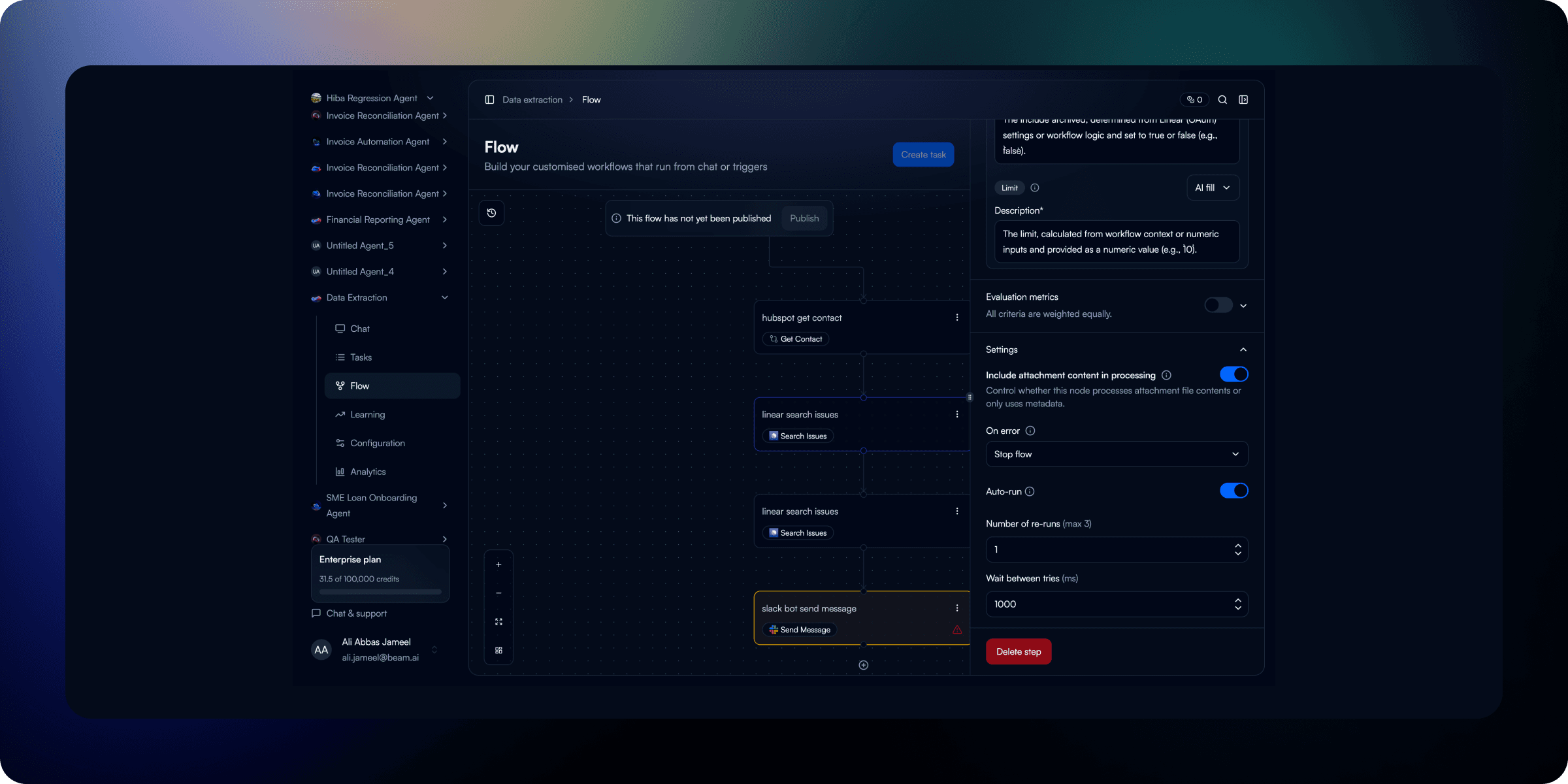
Bauen Sie nicht, was Sie kaufen können. Führende KI-Agenten-Plattformen wie Beam AI bieten:
Visuelle Workflow-Builder für nicht-technische Benutzer
Fazit: Die Plattform-Ära annehmen
Die Entscheidung, ob Unternehmen KI bauen oder kaufen sollen, ist nicht mehr kontrovers; die Daten haben entschieden. Mit 76 % der Organisationen, die nun KI-Lösungen erwerben, und 37 Milliarden Dollar Unternehmens-KI-Ausgaben, die in Plattformen und Anwendungen fließen, ist die Botschaft klar: Die Zukunft gehört denen, die KI am schnellsten implementieren können, nicht denen, die sie von Grund auf bauen.
Die Organisationen, die mit KI erfolgreich sind, sind nicht die mit den größten Entwicklungsteams. Es sind jene mit den besten Plattformstrategien.
Bereit, den 76% beizutreten? Erkunden Sie Beam AI's Unternehmensplattform und sehen Sie, wie führende Unternehmen KI-Agenten in Tagen statt Monaten implementieren. Starten Sie mit unserer Vorlagen-Galerie und vorgefertigten Integrationen, um Ihre KI-Transformation zu beschleunigen.