
By submitting, you consent to our use of your data. Privacy Policy.
Category
Healthcare
Built by
Beam.ai
Garmin is a work management platform for health and activity teams, organized around users, activities, wellness metrics, and device data. The vendor documentation defines the resource model and required permissions. Anchor the workflow on ownership and state transitions, not on an abstract promise to automate work. Use the Beam catalogue entry as a starting point, then confirm connector actions and event coverage before rollout

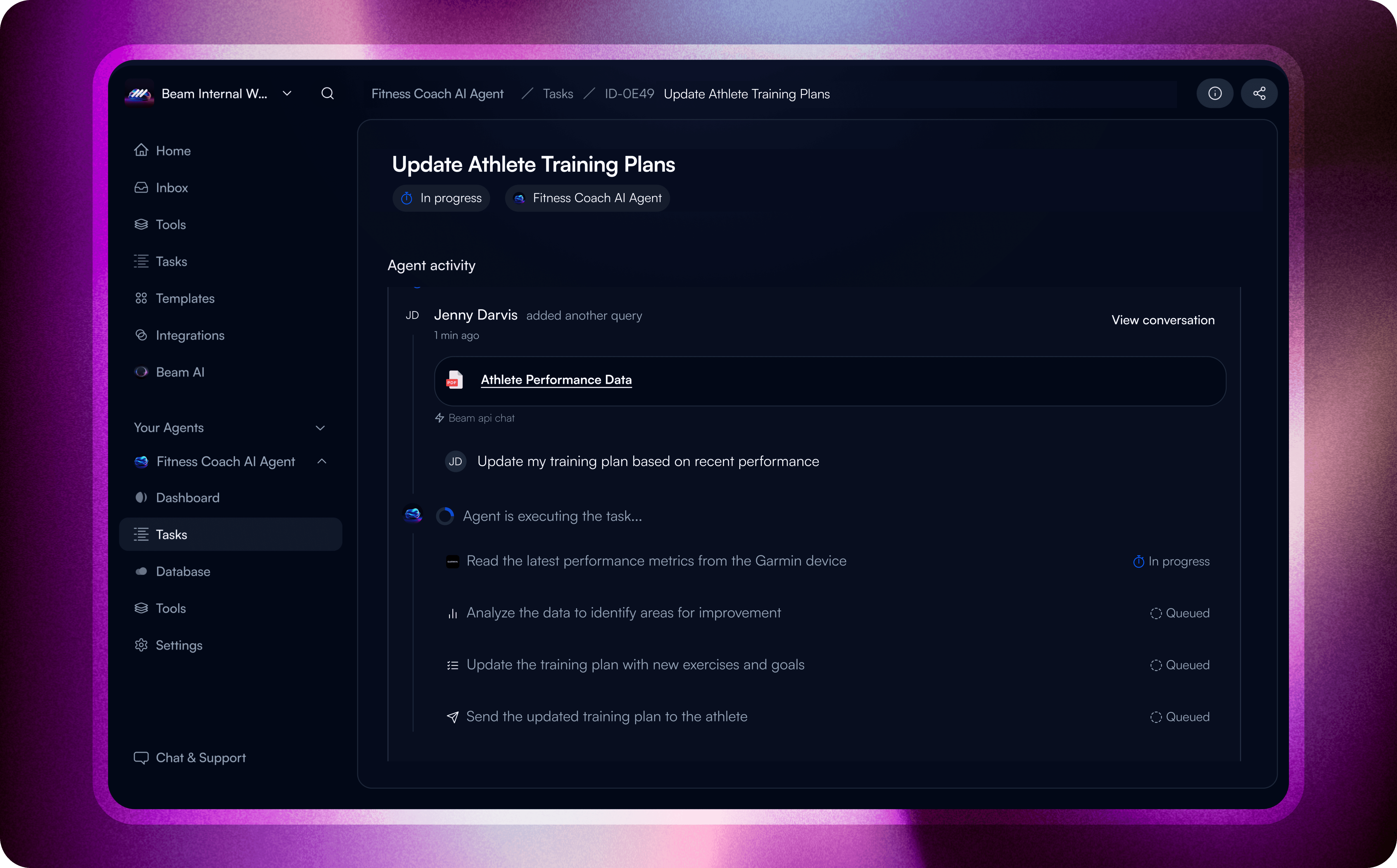
What the source documentation says: Garmin
The vendor's documentation describes Garmin through users, activities, wellness metrics, and device data. That makes it possible to frame a precise workflow, but not to assume every operation is exposed through the Beam connector. For Garmin, keep user context attached to the owner of the next decision
A controlled workflow design
A controlled workflow separates product facts from Beam configuration. Confirm the user event, the fields needed for a decision, and the owner of the result. Route missing data or uncertain permissions to review instead of guessing
Questions to test first
Map a user record is created, updated, or ready for review to one named decision. Then verify that the connector can supply the relevant user context and that Beam has an approved place to return the result.
Use a separate test for users and activities that need escalation. The purpose is to make the handoff legible, not to remove human judgment from it.
Operational value
A clear relationship between the product event and the next owner.
A more defensible audit trail for approved decisions.
A safer way to expand only after connector scope has been proven.
Before you build
Check the connector's available read, write, search, notification, and event operations for your Beam workspace. Confirm the vendor authentication method, required scopes, plan limits, and any approval requirements. Treat the two workflow patterns above as designs to validate, not promises of universal coverage.