Categoría
Construido por
Flujos de trabajo anticipativos
Entrada de catálogo
La entrada de catálogo utiliza agentes para validar datos, ejecutar pasos, derivar excepciones para revisión humana y registrar resultados en los sistemas.
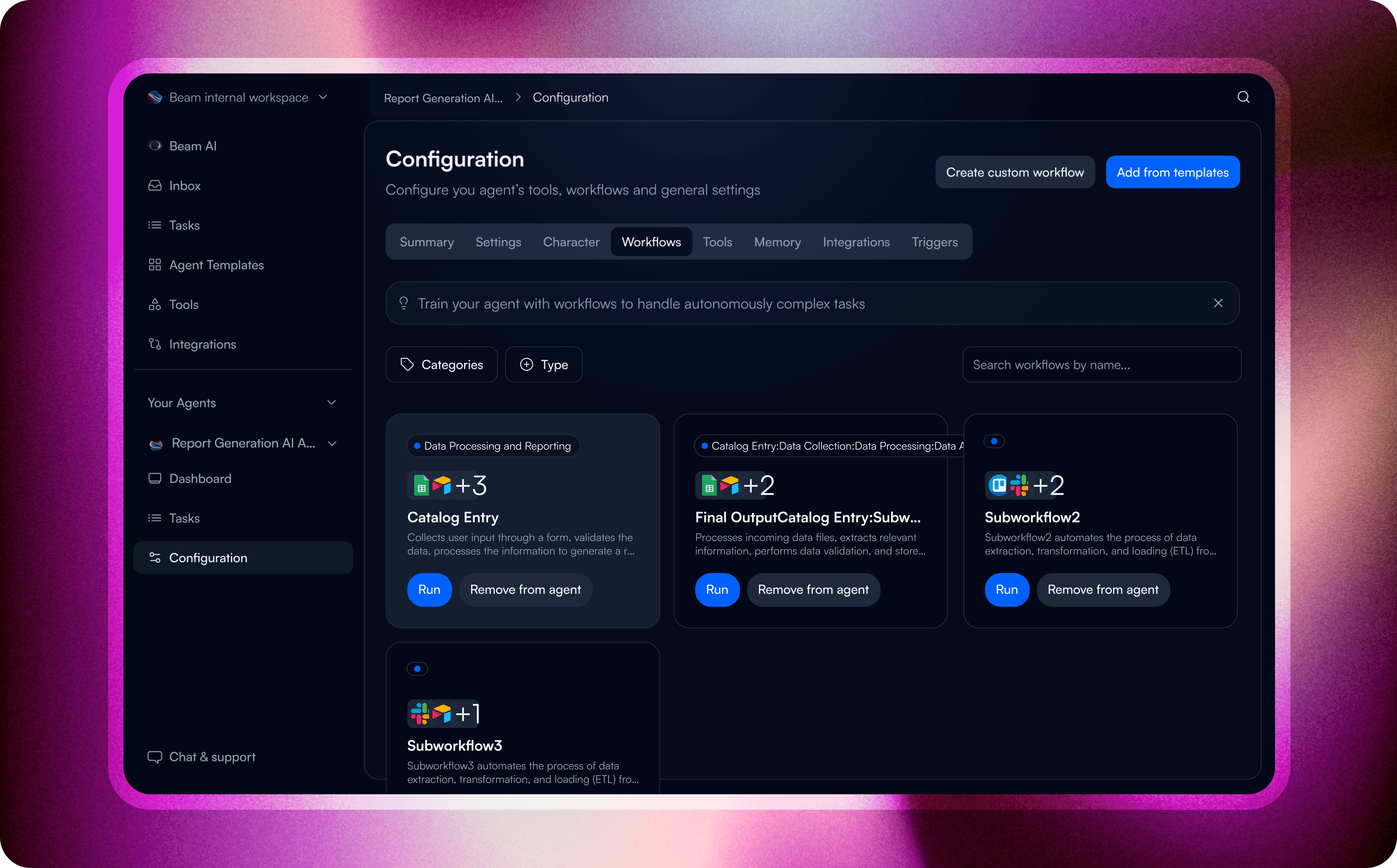

El flujo de trabajo de entrada al catálogo automatiza la gestión de los detalles del producto, incluyendo nombres, descripciones, imágenes, precios y niveles de stock. Al garantizar la precisión y la consistencia, este proceso mantiene los datos de los productos actualizados y organizados dentro del sistema.
Con la automatización de procesos mediante agentes de IA, las empresas pueden reducir el esfuerzo manual, mejorar la fiabilidad de los datos y mantener catálogos de productos bien estructurados. Este flujo de trabajo permite a las organizaciones escalar sus operaciones de manera eficiente al tiempo que minimizan los errores. Es fundamental para sectores como el comercio electrónico, el retail y la venta al por mayor, donde la precisión de la información de los productos es crítica para las operaciones.
Una entrada de catálogo eficaz garantiza que las bases de datos de productos se mantengan precisas y actualizadas, impulsando operaciones fluidas y mejorando la experiencia del cliente. La automatización de este flujo de trabajo permite a las empresas centrarse en el crecimiento estratégico al tiempo que preservan la integridad de sus datos.
A continuación se detallan algunos casos de uso en los que se puede aplicar este flujo de trabajo:
Disparador
La Entrada en el Catálogo comienza cuando el propietario del producto recibe una solicitud o registro que cumple con los requisitos. Prosigue una vez que se dispone de los datos y el acceso necesarios para extraer del correo electrónico los detalles del producto, tales como el nombre, la descripción, el precio y los niveles de stock.
Cómo funciona



Sistemas conectados y fuentes de entrada
Los datos de entrada requeridos incluyen la solicitud o registro de origen, los campos y documentos necesarios para extraer detalles del producto (como nombre, descripción, precio y niveles de stock) del correo electrónico, los datos de referencia para su posterior validación y el acceso aprobado a cada sistema de destino.
Decisiones y excepciones humanas
El Product Owner revisa la información faltante, las excepciones de políticas, los resultados de baja confianza y las acciones que alteran el resultado final de la gestión del catálogo e inventario. Los casos aprobados continúan; los rechazados se devuelven para su corrección o gestión manual.
Consideraciones de auditoría y controles corporativos
La entrada del catálogo debe utilizar acceso de mínimo privilegio, validación de campos obligatorios, registros auditables de decisiones y escrituras, y una condición de parada cuando falten datos o la confianza esté por debajo del umbral aprobado. El propietario del proceso define las reglas de reintento, escalada, privacidad y reversión antes del lanzamiento.
Resultados y criterios de parada
El flujo de trabajo finaliza tras la última acción aprobada: actualizar o sincronizar los datos del catálogo en todas las plataformas y generar un registro de confirmación. Escribe el resultado validado en el sistema de registro autorizado, registra el resultado y notifica al responsable asignado cuando se requiere un seguimiento adicional.



Explora otros casos de uso
Vea nuestros otros casos de uso