Categoría
Construido por
Flujos de trabajo anticipativos
Actualización del estado de los pedidos
La actualización del estado de los pedidos utiliza agentes para validar datos, ejecutar procesos, derivar excepciones para su revisión humana y registrar los resultados en los sistemas.
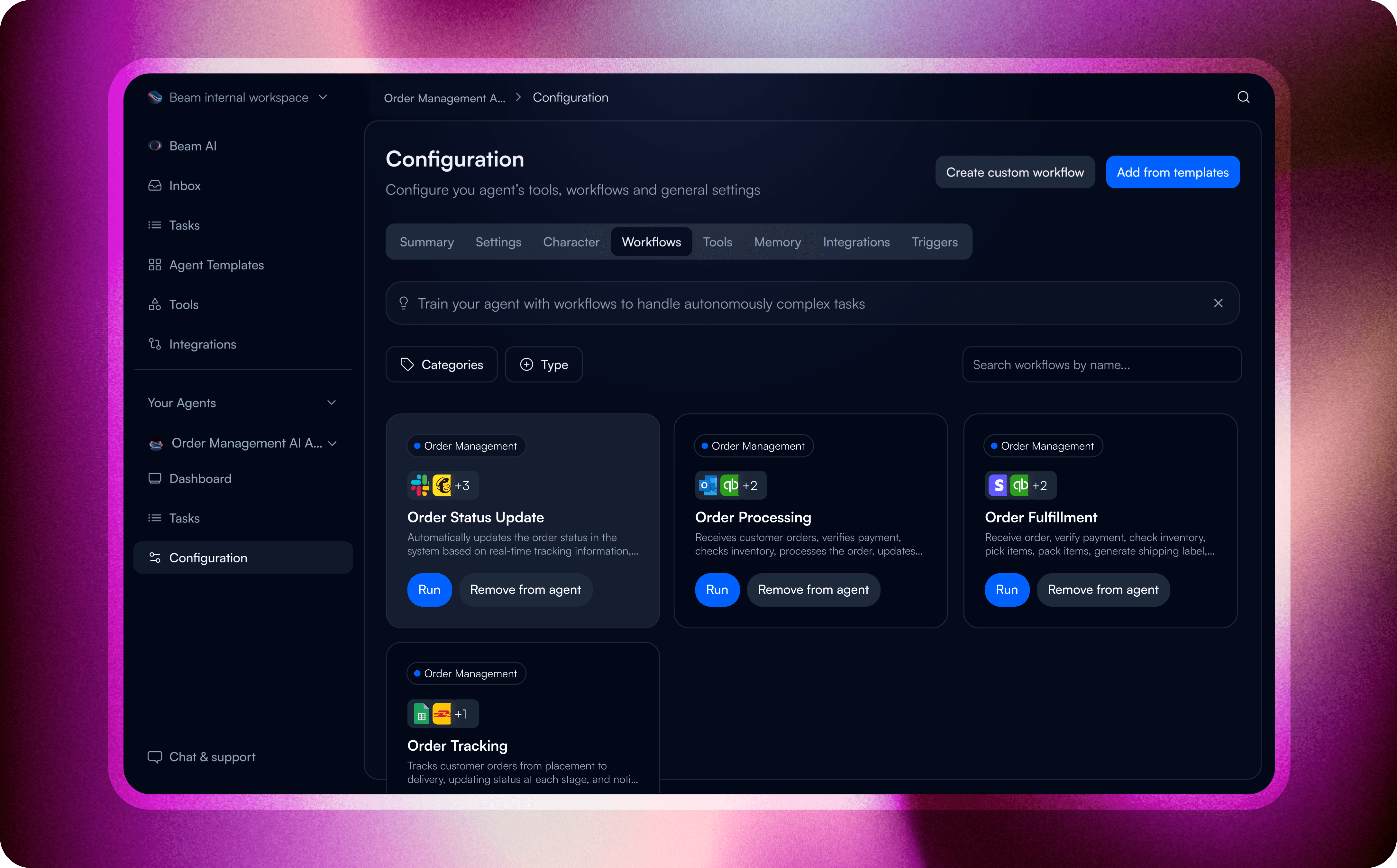

El flujo de trabajo de actualizaciones del estado de pedidos automatiza el proceso de seguimiento y actualización de estados en múltiples plataformas, garantizando una comunicación en tiempo real y minimizando la intervención manual. Genera actualizaciones y notificaciones oportunas, asegurando que los clientes estén informados durante todo el proceso de compra.
Al integrar la automatización de procesos mediante agentes (agentic process automation), las empresas pueden realizar un seguimiento de los envíos de manera más eficaz, mantener información precisa de los pedidos en todos los canales y reducir retrasos. Esto se traduce en operaciones más consistentes y mejora la satisfacción del cliente al proporcionar información fiable y actualizada sobre el estado de sus pedidos. Este flujo de trabajo es esencial para aumentar la confianza del cliente y optimizar el proceso de gestión de pedidos.
Un seguimiento eficaz de los pedidos y una comunicación oportuna son clave para mejorar la satisfacción y la retención de los clientes. Automatizar las actualizaciones del estado de los pedidos garantiza una comunicación constante y a tiempo, reduciendo la carga de trabajo de los equipos de soporte técnico.
Disparador
La Actualización del Estado de Pedidos se inicia cuando el responsable de soporte al cliente recibe una solicitud o registro que cumple los requisitos. Este proceso avanza una vez que están disponibles los datos y el acceso necesarios para recuperar actualizaciones de estado en tiempo real desde los sistemas de envío o inventario.
Cómo funciona



Sistemas conectados y fuentes de entrada
Los datos de entrada requeridos incluyen la solicitud o registro de origen, los campos y documentos necesarios para recuperar actualizaciones de estado en tiempo real de los sistemas de envío o inventario, los datos de referencia para su posterior validación y el acceso aprobado a cada sistema de destino.
Decisiones y excepciones humanas
El responsable de Soporte al Cliente revisa la información faltante, las excepciones de políticas, los resultados de baja confianza y las acciones que modifican el resultado final del soporte al cliente. Los casos aprobados continúan su curso; los rechazados se devuelven para su corrección o gestión manual.
Consideraciones de auditoría y controles corporativos
Las actualizaciones del estado de los pedidos deben utilizar un acceso de mínimo privilegio, validación de campos obligatorios, registros auditables de decisiones y escrituras, y una condición de parada cuando falten datos o la confianza esté por debajo del umbral aprobado. El propietario del proceso define las reglas de reintento, escalada, privacidad y reversión antes del lanzamiento.
Resultados y criterios de parada
El flujo de trabajo finaliza tras la última acción aprobada: destaca retrasos o problemas para que los equipos de soporte los resuelvan de inmediato. Escribe el resultado validado en el sistema de registro aprobado, registra el desenlace y notifica al responsable cuando se requiere un seguimiento.
Agentes de Beam participantes



Explora otros casos de uso
Vea nuestros otros casos de uso