7 دقيقة قراءة
Why Insurance Companies Are Replacing Rules Engines With AI Agents in 2026


By submitting, you consent to our use of your data. Privacy Policy.
Category
أتمتة العملاء
Share the article
كان من المفترض أن تحل محركات القواعد مشكلة أتمتة التأمين؛ من خلال تحديد الشروط، ورسم خريطة للنتائج، ونشر شجرة القرار، وترك النظام يتعامل مع المطالبات دون أي تدخل بشري. وهي تعمل بشكل جيد بالفعل في القرارات البسيطة ذات الحجم الكبير، مثل التحقق مما إذا كانت وثيقة التأمين نشطة أم لا.
لكن المشكلة تظهر عندما تصبح المطالبات معقدة ولو قليلاً. فقد يحتوي محرك القواعد الخاص بمطالبات السيارات على 200 شرط تغطي السيناريوهات القياسية، ولكن عندما يقدم العميل مطالبة تتضمن سيارة مستأجرة في بلد آخر، ومسؤولية جزئية، ونزاعاً حول أضرار سابقة، فإن محرك القواعد إما أن يرفضها تماماً أو يرسلها للمراجعة اليدوية. إن شركة التأمين التي تدير 50,000 مطالبة شهرياً قد تنجح في أتمتة 30-40% منها عبر القواعد، بينما ينتهي المطاف بنسبة 60-70% المتبقية على مكتب الموظف المختص، وغالباً دون أي سياق يوضح سبب عجز النظام عن معالجتها.
هذه هي الفجوة التي تسدها وكلاء الذكاء الاصطناعي. ليس من خلال استبدال محرك القواعد بالكامل، بل عبر تولي شريحة المطالبات المتوسطة التي تعد معقدة للغاية بالنسبة للقواعد الجامدة، وروتينية جداً بالنسبة للموظفين الخبراء. وقد نجحت إحدى شركات التأمين الأوروبية في أتمتة 91% من قرارات مطالبات السيارات بعد نشر وكلاء الذكاء الاصطناعي إلى جانب محرك القواعد الحالي لديها، مما أدى إلى زيادة سرعة المعالجة بنسبة 46% وارتفاع معدلات رضا العملاء بنسبة 9%.
ما لا تستطيع محركات القواعد فعله (ولم تُصمم له أساساً)
تنفذ محركات القواعد منطقاً محدداً مسبقاً، وهذا يمثل قوتها وحدودها في آن واحد.
لا يمكنها تفسير البيانات غير المهيكلة. عندما يقرأ موظف التأمين تقرير الشرطة، وتقدير تكلفة الإصلاح، وثلاث صور لأضرار السيارة، فإنه يقوم بعمل يختلف جوهرياً عن مطابقة الحقول في قاعدة البيانات. فهو يستخرج الحقائق ذات الصلة من مستندات غير منظمة وغير متناسقة، ويقيم مدى موثوقيتها، ويصدر حكماً بناءً على ذلك. أما محركات القواعد فتحتاج إلى مدخلات مهيكلة، وأي مستند يصل كملف PDF أو صورة أو نص حر يتطلب تدخلاً بشرياً لتحويله إلى حقول يمكن للمحرك معالجتها.
لا يمكنها التعامل مع الاستثناءات التي لم تتم برمجتها عليها. تتطلب كل حالة استثنائية جديدة من المطور إضافة قاعدة جديدة. وتدريجياً، يؤدي هذا إلى إنشاء مجموعات ضخمة من القواعد تصبح فيها التفاعلات بينها غير قابلة للتنبؤ. وعادةً ما تدير فرق تكنولوجيا المعلومات في شركات التأمين محركات قواعد تحتوي على ما بين 500 إلى أكثر من 1000 شرط، وقد يؤدي تغيير قاعدة واحدة إلى نتائج غير متوقعة في قواعد أخرى. وقد وجد تحليل أجرته شركة McKinsey لعمليات التأمين أن تعقيد القواعد هو السبب الرئيسي وراء توقف معدلات الأتمتة عند 30-40% لدى معظم شركات التأمين.
لا تتعلم من النتائج. إذا وافق محرك القواعد على مطالبة تبين لاحقاً أنها احتيالية، أو أرسل مطالبة مشروعة للمراجعة مما أدى إلى هدر ثلاثة أيام من وقت الموظف، فلن يتغير شيء في النظام، وسيتكرر الخطأ نفسه حتى يكتشف شخص ما هذا النمط يدوياً ويكتب قاعدة جديدة. وبحلول ذلك الوقت، تكون الأضرار المالية وتلك المتعلقة بتجربة العملاء قد تفاقمت بالفعل.
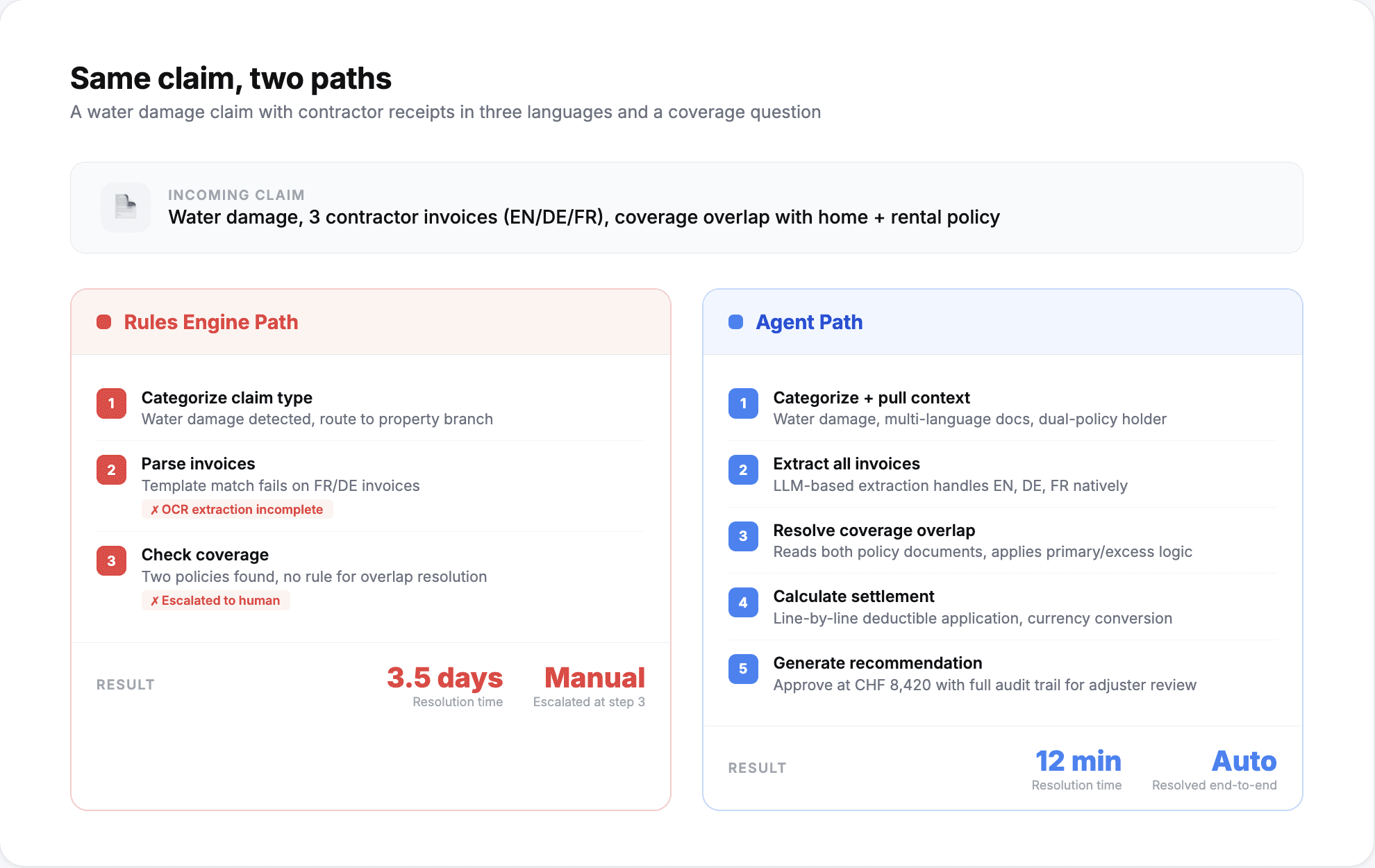
كيف يتعامل وكلاء الذكاء الاصطناعي مع ما تعجز عنه محركات القواعد
يعمل وكلاء الذكاء الاصطناعي في مطالبات التأمين بشكل مختلف عن محركات القواعد في ثلاثة جوانب رئيسية.
يعالجون المستندات غير المهيكلة مباشرة. يستقبل الوكيل طلب المطالبة، بما في ذلك الصور وملفات PDF والأوصاف النصية الحرة وتقارير الجهات الخارجية، ويستخرج نقاط البيانات ذات الصلة دون الحاجة إلى تحويل يدوي. ويستخدم أحد مشاريع تأمين الأعمال الزراعية في الولايات المتحدة وكلاء الذكاء الاصطناعي لمعالجة 15,000 نقطة بيانات شهرياً تشمل تقارير الطقس، وصور الأقمار الصناعية، وبيانات الإنتاجية التاريخية، مما حقق أتمتة بنسبة 93% في تجميع البيانات مع تسريع قرارات الاكتتاب بنسبة 85%.
يطبقون التفكير السياقي، وليس مجرد مطابقة الكلمات. عندما يقيّم الوكيل مطالبة ما، فإنه يأخذ في الاعتبار شروط الوثيقة، وسجل مطالبات حامل الوثيقة، والمطالبات المماثلة خلال الـ 12 شهراً الماضية، والتفاصيل المحددة للحادث. هذا الأسلوب أقرب لكيفية تفكير الموظف متوسط الخبرة منه إلى كيفية تنفيذ شجرة القرار. ويمكن للوكيل تحديد أن مطالبة إصلاح بقيمة 2400 دولار لسيارة ذات سجل نظيف ومستندات مطابقة يجب الموافقة عليها، في حين يجب تحويل مطالبة أخرى بالقيمة نفسها ولكن بصور غير متناسقة وتعد الإصلاح الثالث في غضون ستة أشهر للمراجعة الدقيقة.
يتطورون باستمرار من خلال التغذية الراجعة. عندما يقوم الموظف بتعديل توصية الوكيل، فإن هذا التعديل يغذي النموذج ويحسنه. ومع مرور الوقت، يتعامل الوكيل مع المزيد من المطالبات الرمادية (الغامضة) بشكل صحيح. وتسمح آليات التعلم الذاتي للنظام بالتكيف مع أنماط الاحتيال المتغيرة، وهياكل الوثائق الجديدة، واختلافات المطالبات الإقليمية دون انتظار قيام المطور بكتابة قواعد جديدة.
كيف تبدو الأتمتة بنسبة 91% على أرض الواقع؟
عندما تسمع شركات التأمين نسبة "91% أتمتة"، فإن السؤال المنطقي هو: ماذا عن الـ 9% المتبقية؟ وهل تعني أتمتة 91% تراجع الجودة؟
في مشروع مطالبات السيارات الأوروبي، يمثل الرقم 91% المطالبات التي حلها الوكلاء بالكامل من البداية إلى النهاية دون أي تدخل بشري. أما الـ 9% المتبقية فتم تحويلها إلى الموظفين، ولكن ليس كملفات مبهمة؛ بل كانت كل مطالبة محولة تأتي مصحوبة بتحليل الوكيل، والسبب المحدد للتحويل، والإجراء الموصى به. وبذلك، كان الموظفون يراجعون ملخصاً جاهزاً بدلاً من البدء من الصفر.
وتوضح بيانات الجودة بقية القصة؛ إذ ارتفع معدل رضا العملاء (NPS) بنسبة 9% بعد إطلاق المشروع. والمطالبات التي كانت تستغرق 60 يوماً لتسويتها أصبحت تُغلق في ثلاثة أيام فقط. أما الموظفون الذين كانوا يتعاملون مع 40-50 مطالبة روتينية يومياً، فقد تحولوا إلى التعامل مع 15-20 مطالبة معقدة بتركيز أكبر ووقت كافٍ لكل حالة.
أما بالنسبة لشركة تأمين الأعمال الزراعية في الولايات المتحدة، فقد كان التأثير مشابهاً ولكن في جانب آخر؛ حيث كانت سرعة الاكتتاب هي العائق وليس معالجة المطالبات. وقد قام وكلاء الذكاء الاصطناعي بأتمتة 93% من تجميع البيانات التي كان المكتتبون يقومون بها يدوياً سابقاً، مستعينين بقواعد بيانات الطقس، وتقارير المحاصيل التابعة لوزارة الزراعة الأمريكية، ومزودي صور الأقمار الصناعية. وأصبحت قرارات الاكتتاب التي كانت تستغرق أسبوعاً تنجز الآن في يوم واحد، كما تحسنت دقة تقييم المخاطر لأن الوكلاء يعالجون نقاط بيانات أكثر مما يمكن للمكتتب البشري مراجعته في الإطار الزمني نفسه.
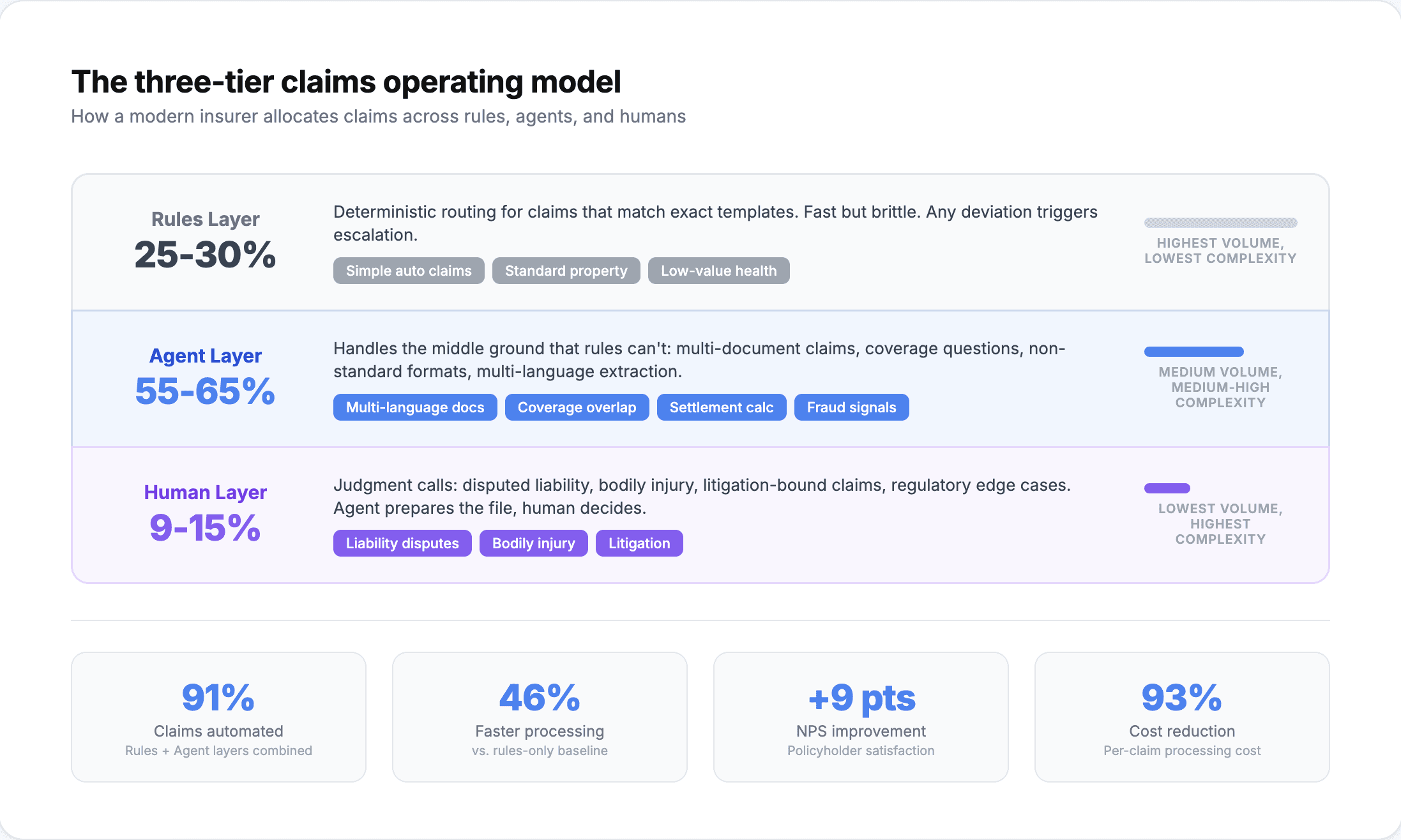
النموذج الهجين: العمل المشترك بين الوكلاء ومحركات القواعد
لا تتمثل استراتيجية النشر الذكية في إلغاء محرك القواعد، بل في بناء طبقة من وكلاء الذكاء الاصطناعي فوقه.
ما زالت محركات القواعد تتعامل مع 25-30% من المطالبات البسيطة للغاية: مثل التحقق من صحة الوثيقة، وتأكيد التغطية، والموافقات المباشرة التي تقل عن حد مالي معين. هذه هي المطالبات التي تتطلب السرعة أكثر من التقدير الشخصي، ويحلها محرك القواعد في أجزاء من الثانية.
بينما يتولى وكلاء الذكاء الاصطناعي نسبة 55-65% في الوسط: وهي المطالبات التي تتطلب تفسير المستندات، أو المقارنة المرجعية، أو التقدير السياقي ولكنها تتبع أنماطاً مألوفة. هذه هي المطالبات التي تُحال حالياً إلى الموظفين بشكل تلقائي، ليس لحاجتها إلى رأي خبير، بل لعجز محرك القواعد عن التعامل مع تعقيداتها.
وينصب تركيز الموظفين البشريين على نسبة 9-15% التي تتطلب خبرة حقيقية: مثل تحقيقات الاحتيال، ونزاعات التغطية، وتحديد المسؤوليات المعقدة، والحالات الحساسة تنظيمياً. وبفضل تولي الوكلاء للشريحة المتوسطة، يحصل الموظفون على وقت أطول وسياق أفضل للحالات التي تحتاجهم بالفعل.
ماذا يعني هذا لفرق عمليات التأمين
إن الانتقال من القواعد إلى الوكلاء ليس مجرد قرار تقني منعزل؛ بل إنه يغير طريقة هيكلة فرق المطالبات، وتدريب الموظفين، وكيفية قياس الأداء.
التحول في التوظيف من الكم إلى التعقيد. بدلاً من توظيف أشخاص لمعالجة المطالبات الروتينية، تحتاج الفرق إلى موظفين يمكنهم التعامل مع الحالات المحولة بوعي أكبر وخبرة أعمق؛ فالوظيفة تصبح أكثر تخصصاً ولا تُلغى.
التحول في القياس من معدل الإنجاز إلى الدقة. عندما يتعامل وكلاء الذكاء الاصطناعي مع 91% من حجم العمل، يصبح قياس إنتاجية الموظف بعدد المطالبات اليومية أمراً غير مجدٍ. وبدلاً من ذلك، تصبح المقاييس الهامة هي: دقة التحويل (هل يحدد الوكلاء المطالبات الصحيحة للمراجعة؟)، ومعدل التعديل (كم مرة يختلف الموظفون مع توصيات الوكيل؟)، وجودة التسوية (هل النتائج أفضل أم أسوأ مقارنة بالفترة التي سبقت إدخال الوكيل؟).
التطبيق يكون تدريجياً وليس دفعة واحدة. بدأت شركات التأمين التي حققت نتائج ملموسة بنوع واحد من المطالبات، غالباً السيارات أو الممتلكات، وأثبتت دقة تفوق 90%، ثم توسعت بعد ذلك. إن محاولة نشر وكلاء الذكاء الاصطناعي في جميع قطاعات الأعمال في وقت واحد هي السبب وراء تعطل مشاريع الذكاء الاصطناعي في الشركات الكبرى.
لقد نقلت محركات القواعد عمليات التأمين من 0% إلى 30% من الأتمتة، والآن يدفع وكلاء الذكاء الاصطناعي هذه النسبة إلى أكثر من 90%. إن الشركات التي تبدأ بالتحرك الآن تبني ميزة تشغيلية سيكون من الصعب جداً مجاراتها بمجرد أن يتبعها بقية قطاع الصناعة.