
By submitting, you consent to our use of your data. Privacy Policy.
Category
استراتيجية العمل
Share the article
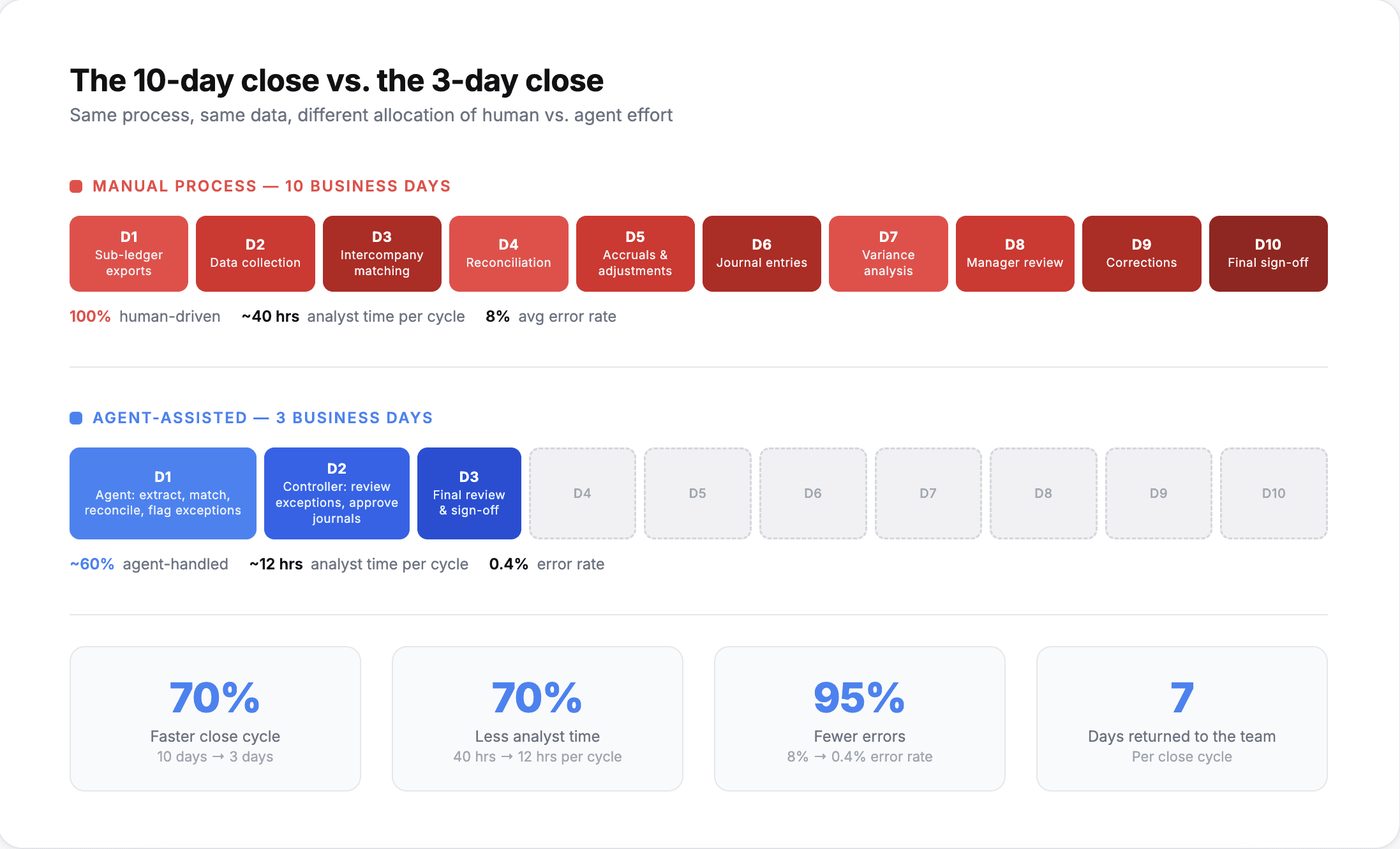
لا يزال الإغلاق المالي لمتوسط الشركات يستغرق من ستة إلى عشرة أيام عمل. ليس لأن المحاسبة معقدة، بل لأن العمل على البيانات يتم يدويًا. يقضي المفاوشون الماليون الأيام الثلاثة الأولى في تتبع الأرقام عبر أنظمة تخطيط موارد المؤسسات (ERPs)، وبوابات البنوك، وجداول البيانات. وتذهب اليومان التاليان للتسويات. بينما تخصص الأيام الأخيرة لتنسيق التقارير التي سيطلب شخص ما في الهيكل الإداري الأعلى إعادة إعدادها على أي حال.
تدرك فرق الشؤون المالية هذا الأمر جيدًا. وقد حاولت الأغلبية حل المشكلة باستخدام وحدات الماكرو، وبرمجيات أتمتة العمليات الروبوتية (RPA)، ونماذج أفضل. تكمن المشكلة في أن هذه الأدوات تؤتمت ضغطات المفاتيح، وليس التقدير البشري. يمكنها نقل البيانات بين الأنظمة، لكنها لا تستطيع تفسير دفعة جزئية، أو رصد فاتورة غير متطابقة، أو تحديد ما إذا كان فرق التباين يتطلب تصعيدًا. وهنا يأتي دور وكلاء الذكاء الاصطناعي ليغيروا هذه المعادلة بالكامل.
لماذا لا يزال الإغلاق المالي بطيئًا في عام 2026
هناك ثلاثة أسباب رئيسية تبقي دورة الإغلاق المالي عالقة عند خمسة أيام فأكثر، حتى في الفرق التي استثمرت بالفعل في الأتمتة.
تشتت البيانات في أماكن كثيرة جدًا. قد تستخدم شركة متوسطة الحجم نظام SAP لدفتر الأستاذ العام، ونظام فوترة منفصل، وبوابة بنكية للمراكز النقدية، وبرنامج Excel للاستبعادات بين الشركات الشقيقة. لكل نظام من هذه الأنظمة صيغة تصدير خاصة به، ووتيرة تحديث مستقلة، وإصدار خاص به من البيانات الصحيحة. وقبل أن يتمكن أي شخص من إجراء أي تسوية، يتعين على شخص ما سحب البيانات من جميع هذه المصادر وتوحيدها ومقارنتها.
عملية التسوية تعتمد بشكل كبير على التقدير البشري. تبدو عملية المطابقة الثلاثية بين أوامر الشراء وإيصالات استلام البضائع والفواتير عملية آلية بحتة، حتى تصطدم بشحنة جزئية، أو تباين في تحويل العملات، أو ائتمان مورد تم تطبيقه على الفترة المالية الخاطئة. تقوم الأتمتة التقليدية إما بتحديد كل شيء على أنه حالة استثنائية أو تفويت الحالات الهامة فعليًا. وتؤدي كلتا النتيجتين إلى خلق المزيد من العمل.
العملية متتالية ومتعاقبة. لا يمكن البدء في مراجعة قيود اليومية حتى تنتهي عملية التسوية. ولا يمكن البدء في التقارير الإدارية حتى يتم ترحيل قيود اليومية. كما لا يمكن البدء في تحليل التباين حتى يتم إنشاء التقارير. تنتظر كل خطوة السابقة لها، وأي تأخير في الخطوة الثانية يعطل كل ما يليها.
أين يكمن دور وكلاء الذكاء الاصطناعي في دورة الإغلاق
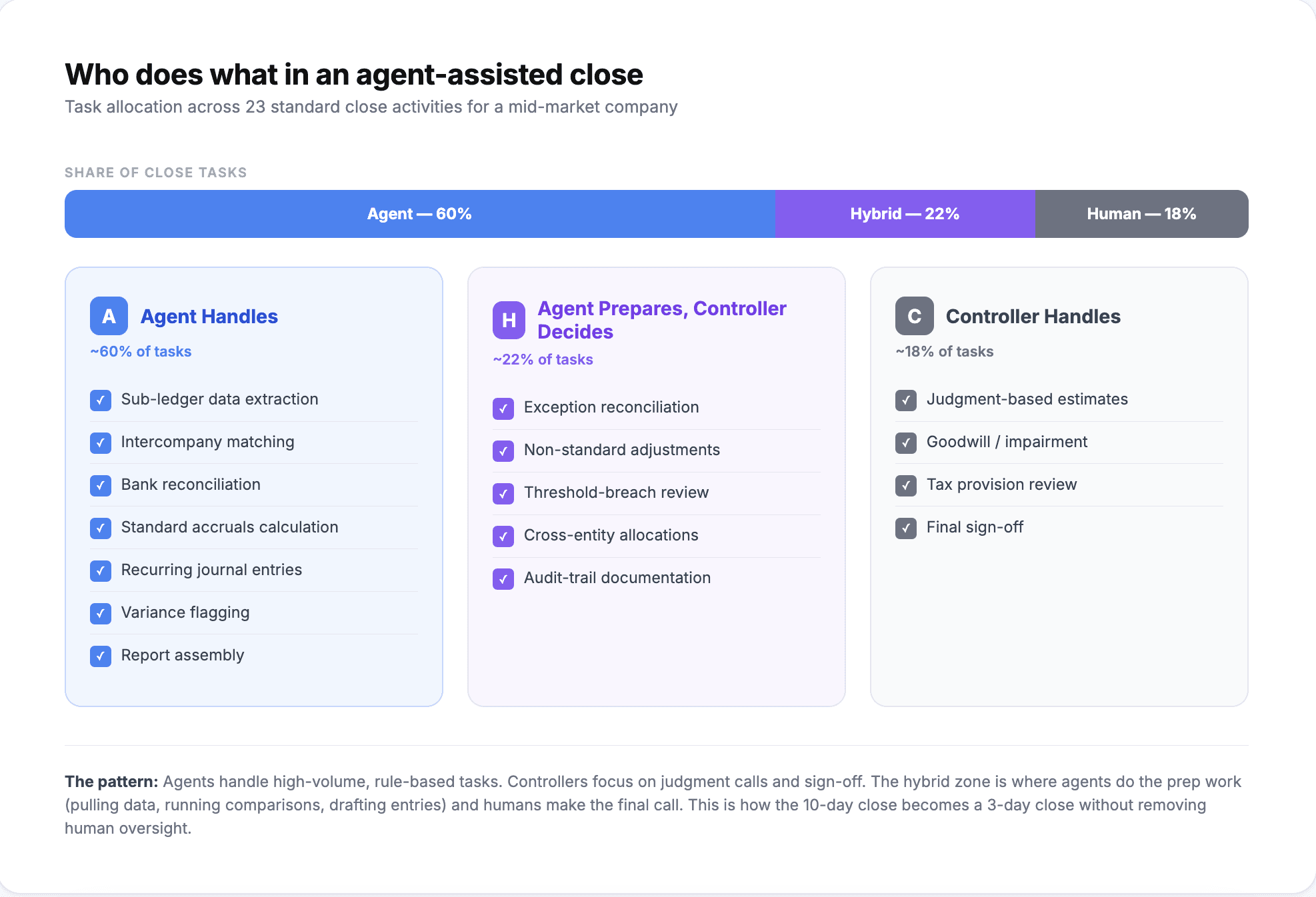
لا يحل وكلاء الذكاء الاصطناعي محل عملية الإغلاق المالي بالكامل، بل يضغطون الأجزاء التي لا تتطلب التقدير المهني للمراقب المالي.
جمع البيانات وتوحيدها تلقائيًا. يتصل الوكيل بنظام تخطيط موارد المؤسسات (ERP) الخاص بك، والأنظمة المصرفية، ومنصات الفوترة من خلال علاقات تكامل مسبقة البناء. وهو يسحب بيانات المعاملات، ويوحد التنسيقات، ويرصد التباينات قبل أن يفتح أي موظف بشري جدول بيانات. وقد حقق أحد مشاريع عمليات المالية دقة بلغت 98% عبر مهام سير عمل التسوية، مع معالجة آلاف المعاملات التي كانت تتطلب سابقًا مراجعة يدوية.
المطابقة الثلاثية الذكية. بدلاً من المطابقة الصارمة القائمة على القواعد، يستخدم الوكلاء التفكير السياقي للتعامل مع الحالات الاستثنائية. دفعة جزئية مقابل فواتير متعددة، أو إشعار دائن تم تطبيقه بأثر رجعي، أو فرق تقريب عملات بمقدار 0.03 دولار؛ هذه هي الاستثناءات التي تستهلك ساعات طويلة من وقت المراقب المالي. يقوم الوكلاء بحل الحالات البسيطة تلقائيًا وتوجيه الاستثناءات الحقيقية مع إرفاق سياقها المناسب، وليس مجرد وضع علامة تحذير.
التحقق من صحة قيود اليومية. يقوم الوكلاء بفحص القيود ومقارنتها بالأنماط التاريخية، وقواعد السياسة، وهياكل الحسابات. ويتم تحديد أي قيد مدين غير معتاد لحساب راكد قبل أن يصل إلى المراجع، وليس بعده. ويكتسب هذا الأمر قيمة خاصة في المعاملات بين الشركات الشقيقة، حيث يتسبب عدم التطابق بين الكيانات في حدوث تأخيرات متتالية في التسويات.
تحليل التباين وإعداد التقارير. بمجرد تسوية البيانات وترحيل القيود، يقوم الوكلاء بإنشاء تقارير التباين، وتسليط الضوء على التغييرات الجوهرية، وصياغة التعليقات الإدارية. وقد تحولت الفرق المالية التي تستخدم التقارير المدعومة بالوكلاء من قضاء أيام في التجميع اليدوي إلى تقارير سريعة جاهزة للمدير المالي التنفيذي في دقائق معدودة، مع إرفاق التفسيرات بالفعل بكل بند.
كيف تبدو الأرقام على أرض الواقع
إن الجدوى النظرية لأتمتة عملية الإغلاق المالي واضحة تمامًا. لكن النتائج العملية التي حققتها الفرق التي تطبقها بالفعل تبدو أكثر تحديدًا.
وفقًا لـ استبيان ديلويت لعام 2025 حول تحول الشؤون المالية، فإن الفرق المالية التي تطبق الأتمتة الذكية تقلص أوقات الإغلاق بنسبة تتراوح بين 30% إلى 50% في الدورة الأولى، وبنسبة 50% إلى 70% بعد التحسين. ومع ذلك، فإن توفير الوقت ليس هو المقياس الأكثر أهمية.
تظهر التطبيقات في الشركات الكبرى أن تحسينات الدقة تكتسب أهمية أكبر من السرعة. فعندما يتولى الوكلاء عملية التسوية، ينخفض معدل الخطأ في قيود اليومية لأن التباينات يتم رصدها في مرحلة جمع البيانات، وليس أثناء المراجعة. ويسجل أحد الأنظمة الأساسية التي تعالج العمليات المالية على نطاق واسع توفير أكثر من 40 ساعة أسبوعيًا كانت تُهدر في عمليات الفوترة اليدوية والمطابقة والتسوية، مع تحقيق معدل دقة يبلغ 98% في جميع مهام سير العمل.
بالنسبة للمراقبين الماليين، يعني هذا قضاء فترة الإغلاق في التحليل واتخاذ القرارات التقديرية والتواصل مع أصحاب المصلحة بدلاً من الغرق في معالجة البيانات. وبالنسبة للمديرين الماليين التنفيذيين، يعني ذلك الحصول على أرقام موثوقة في اليوم الثالث بدلاً من اليوم الثامن.
ما لا تؤتمته وكلاء الذكاء الاصطناعي (ولا ينبغي لها ذلك)
لا ينتمي كل جزء في دورة الإغلاق المالي إلى عمل الوكيل الآلي.
تتطلب التقديرات والمستحقات المحاسبية حكما مهنيا دقيقاً حول النتائج المستقبلية. وتعتمد مواقيت الاعتراف بالإيرادات، ومخصصات الضمان، ومخصصات الديون المشكوك في تحصيلها على سياق الأعمال الذي لا يمكن لوكيل الذكاء الاصطناعي تقييمه بشكل مستقل.
تستدعي المعاملات غير المعتادة مراجعة بشرية بطبيعتها. إن انخفاض قيمة الأصول لمرة واحدة، أو تعديل عقود الإيجار المعقدة، أو إعادة صياغة البيانات المالية الجوهرية يجب أن تشمل دائمًا التقييم المباشر من مفاوش مالي.
يعد التواصل مع أصحاب المصلحة تفاعلًا بشريًا بطبيعته. فشرح تباين الهامش لمجلس الإدارة، أو التفاوض على تعديل أسعار التحويل بين الشركات الشقيقة، أو تقديم حزمة الإغلاق المالي للمدققين، كلها محادثات وليست مهام معالجة بيانات.
إن الهدف ليس الوصول إلى إغلاق مالي ذاتي بالكامل، بل تحقيق إغلاق يقضي فيه المراقبون الماليون وقتهم في الـ 20% التي تتطلب خبرة تخصصية، وليس الـ 80% التي تتطلب إدخال البيانات.
كيف تبدأ دون الحاجة إلى تطبيق يستغرق ستة أشهر
إن الخطأ الذي تقع فيه معظم فرق الشؤون المالية عند نشر الوكلاء هو محاولة أتمتة عملية الإغلاق بالكامل دفعة واحدة. الفرق التي تنجح هي تلك التي تبدأ بنطاق ضيق.
اختر مهمة سير عمل تسوية واحدة. تعد تسوية الحسابات البنكية نقطة البداية الأكثر شيوعًا لأن مدخلاتها واضحة (كشف الحساب البنكي، دفتر الأستاذ العام)، ومنطق المطابقة فيها محدد، وحجم معاملاتها كبير. ويمكن لبرنامج تجريبي لمهمة عمل واحدة أن يثبت الدقة والوقت الموفر خلال أسابيع وليس أشهر. تشير فرق الشركات الكبرى التي تستخدم منصات مهام سير العمل القائمة على الوكلاء إلى الانتقال من المرحلة التجريبية إلى الإنتاج الفعلي في غضون أربعة أسابيع فقط.
قس الأمور الصحيحة. يعد تقليص وقت الإغلاق هو المقياس الأبرز، ولكن ينبغي تتبع مقاييس أخرى أيضًا: معدل الاستثناءات (ما هي النسبة المئوية للمعاملات التي لا تزال تتطلب مراجعة يدوية)، ومعدل الدقة (هل القيود التي عالجها الوكيل صحيحة)، وساعات عمل المراقب المالي التي تم توجيهها (من العمل على البيانات إلى العمل التحليلي). تطلعك هذه المقاييس على ما إذا كان الوكيل يعمل بفاعلية حقيقية، وليس مجرد تشغيل آلي.
توسع بناءً على الدقة، لا الطموح المحض. بمجرد استقرار تسوية الحسابات البنكية عند دقة تزيد عن 95%، انتقل إلى مطابقة حسابات الموردين والدائنين. ثم التسويات بين الشركات الشقيقة. ثم التحقق من صحة قيود اليومية. يبنى كل توسع على دقة مثبتة في مهام سير العمل السابقة. إن التسرع في أتمتة تحليل التباين قبل أن تصبح عمليات التسوية راسخة وموثوقة ينقل الأخطاء فقط إلى المراحل التالية بسرعة أكبر.
الإغلاق مشكلة تتعلق بمهام سير العمل، وليست مشكلة تكنولوجيا
لقد قيل للفرق المالية على مدار عقد من الزمان إن البرمجيات الأفضل ستحل مشكلة الإغلاق المالي. فأصبحت أنظمة تخطيط موارد المؤسسات (ERPs) أسرع، وغدت أدوات ذكاء الأعمال (BI) أذكى، وتم نشر روبوتات أتمتة العمليات (RPA). ومع ذلك، لا يزال الإغلاق يستغرق أسبوعًا لأن نقطة الاختناق لم تكن أبدًا في البرمجيات نفسها، بل كانت في العمل اليدوي بين الأنظمة الذي لم تتمكن أي أداة بمفردها من الوصول إليه وسد فجوته.
تنجح وكلاء الذكاء الاصطناعي لأنها تعمل في تلك الفجوة بالتحديد. فهي تتصل بالأنظمة التي تمتلكها بالفعل، وتتعامل مع عمل البيانات الذي يربط بينها، وتسلم المهام للمراقبين الماليين عندما يتطلب الأمر تقديرًا أو قرارًا بشريًا. التكنولوجيا باتت جاهزة، والسؤال المطروح أمام معظم الفرق المالية هو ما إذا كانوا سيستمرون في قضاء خمسة أيام في إدخال البيانات أم سيوجهون ذلك الوقت نحو التحليل الذي يدفع بأعمالهم إلى الأمام حقًا.