8 دقيقة قراءة
AI Agents in Banking: What's Actually Working Beyond the Chatbot in 2026


By submitting, you consent to our use of your data. Privacy Policy.
Category
وكلاء الذكاء الاصطناعي
Share the article
قبل عامين، عندما كان أحد البنوك يقول "إننا ننشر الذكاء الاصطناعي"، كان يقصد عادةً روبوت دردشة يجيب عن استفسارات الرصيد ويوجه الشكاوى إلى موظف بشري. لقد كانت خطوة لتوفير التكاليف لمركز الاتصال، وقد نجحت بشكل كبير بما يكفي لحالة الاستخدام الضيقة تلك.
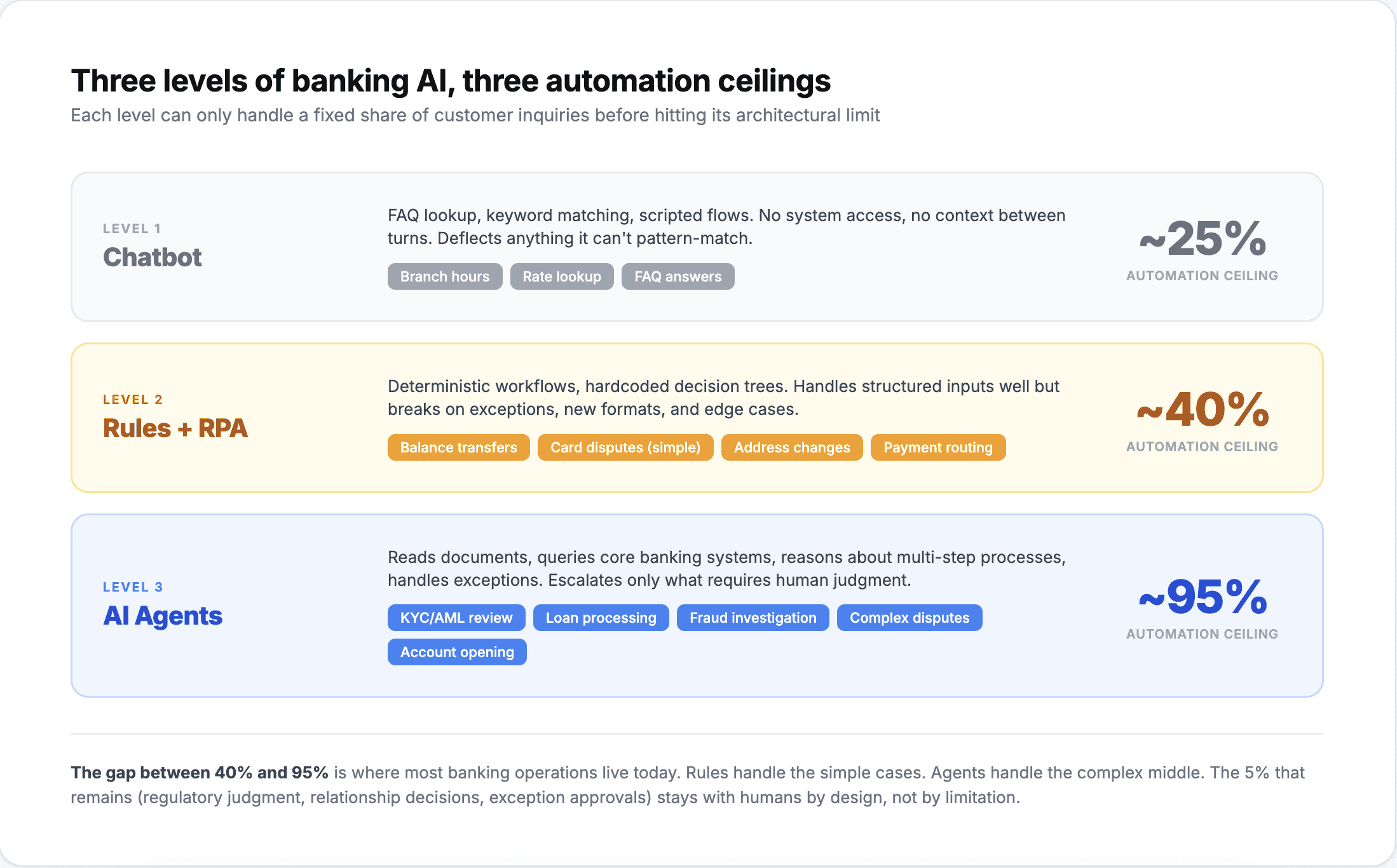
في عام 2026، تغير مسار المحادثة. فالبنوك التي تحقق عوائد ملموسة من الذكاء الاصطناعي لا تنشره في القنوات المواجهة للعملاء أولاً. بل تقوم بنشر وكلاء الذكاء الاصطناعي في عمليات المكاتب الخلفية: التحقق من اعرف عميلك (KYC)، ومعالجة مستندات القروض، ومراقبة المعاملات، والتقارير التنظيمية. هذه هي سير العمل التي تكون فيها المعالجة اليدوية هي الأبطأ، ومعدلات الأخطاء هي الأعلى، وتكلفة الخطأ فيها تُقاس بالغرامات التنظيمية، وليس فقط بشكاوى العملاء.
التحقق من اعرف عميلك (KYC) وضم العملاء: من دقة 60% إلى 96%
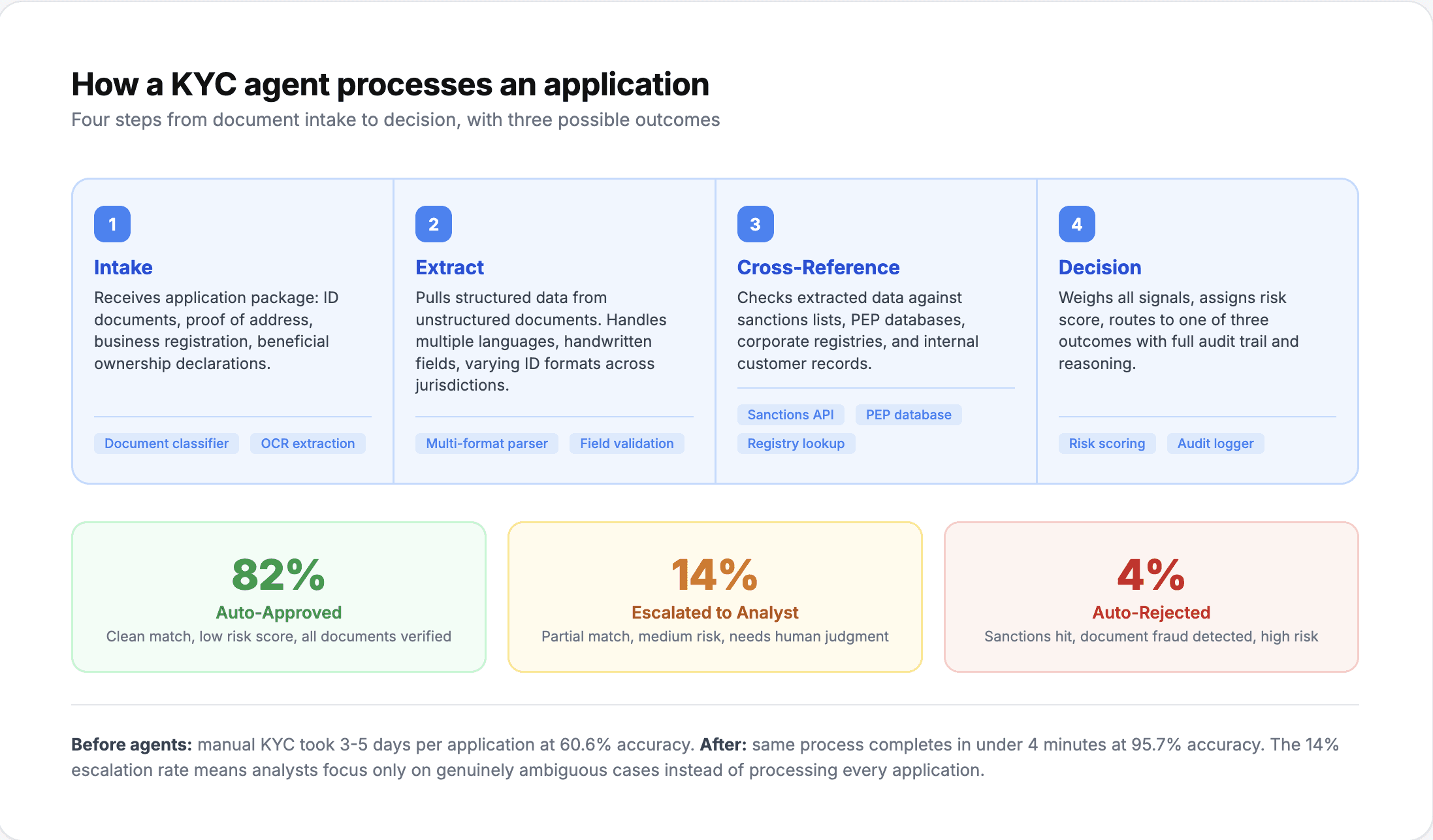
التحقق من اعرف عميلك هو المجال الذي تشعر فيه معظم البنوك بألم العمليات اليدوية بشكل أكثر حدة. حيث يقدم العميل الجديد وثيقة هوية، وإثبات عنوان، وأحياناً إقراراً بمصدر الأموال. يقوم محلل الامتثال بالتحقق من كل وثيقة، ومقارنتها بقوائم العقوبات وقواعد بيانات الأشخاص السياسيين ممثلي المخاطر (PEP)، والتحقق من وجود أي تعارضات، واتخاذ قرار القبول أو الرفض.
المشكلة تكمن في الدقة عند التوسع. أحد البنوك الرقمية الناشئة في أوروبا الذي يعتمد على التحقق اليدوي من اعرف عميلك (KYC) قام بقياس الدقة الأساسية لديه فكانت 60.6%. أي أن أربعاً من كل عشر عمليات تحقق كانت تحتوي على أخطاء: اختلافات غير مكتشفة في العناوين، أو وثائق تم الإبلاغ عنها بالخطأ، أو مقارنات غير متسقة عبر تنسيقات دول مختلفة. ليس لأن المحللين كانوا سيئين في عملهم، بل لأن حجم الحالات الاستثنائية عبر عشرات الدول وأنواع الوثائق والمتطلبات التنظيمية جعل الدقة المستمرة أمراً شبه مستحيل.
بعد نشر وكلاء الذكاء الاصطناعي ذاتيي التعلم)، وصلت تلك الدقة إلى 95.7% في غضون 25 دقيقة وثلاث دورات من التحسين. لقد تعلم الوكيل قواعد التنسيق الخاصة بكل بلد، والفروق التنظيمية الدقيقة عبر الولايات القضائية، وأنماط اختلاف المستندات التي قد يستغرق المحلل البشري شهوراً من العمل للتعرف عليها واستيعابها. وانخفضت أوقات ضم العملاء نتيجة لقلة الطلبات التي تحتاج إلى إعادة مراجعة يدوية، وتمكنت فرق الامتثال من تركيز اهتمامها على الحالات المشبوهة فعلياً بدلاً من أخطاء التحقق الروتينية.
توضح حالة استخدام اعرف عميلك (KYC) نمطاً أوسع في الخدمات المصرفية: فالعقبة لا تكمن في سرعة اتخاذ القرار، بل في اتساق القرار عبر كميات هائلة من المدخلات المختلفة قليلاً.
معالجة القروض: حيث تلتقي المستندات بالقرارات
تعد عملية إنشاء القروض عملية كثيفة المستندات قاومت الأتمتة لنفس السبب الذي واجهه التحقق من اعرف عميلك (KYC)؛ فالمدخلات غير منظمة ومعقدة.
يتضمن طلب القرض العقاري قسائم الراتب، والإقرارات الضريبية، وكشوف الحسابات البنكية، وتقييمات العقارات، وخطابات التحقق من التوظيف. وكل مستند له تنسيق مختلف؛ فبعضها ملفات PDF، وبعضها صور ممسوحة ضوئياً، وبعضها الآخر منشأ رقمياً. وتجب استخراج المعلومات من هذه المستندات ومقارنتها والتحقق من صحتها وفقاً لمعايير الاكتتاب الخاصة بالبنك قبل أن يتمكن مسؤول القروض من اتخاذ القرار.
تتعامل الأتمتة التقليدية مع الأجزاء المنظمة: سحب درجات الائتمان، والتحقق من نسب الدين إلى الدخل مقابل الحدود المقررة، والتحقق من تقييمات العقارات مقابل قواعد بيانات المبيعات المماثلة. بينما يتولى وكلاء الذكاء الاصطناعي الباقي.
يمكن للوكيل الذي يعالج طلب القرض استخراج أرقام الدخل من إقرار ضريبي يحتوي على تعديلات مكتوبة بخط اليد، وتسوِيَتها مع الدخل المذكور في الطلب، والإشارة إلى التعارضات بين خطابات الرواتب المقدمة من صاحب العمل وأنماط الإيداع المصرفي، وإنشاء ملخص للمكتتب يوضح ما يتطابق وما لا يتطابق وسبب ذلك. يحصل المكتتب على ملخص جاهز مع إجراء التحليل بالكامل، وليس كومة من المستندات لقراءتها من الصفر.
بالنسبة للبنوك التي تعالج آلاف الطلبات شهرياً، يتضاعف هذا الأثر الإيجابي. حيث تسجل المنصات المؤسسية التي تعالج العمليات المالية دقة تصل إلى 98% عبر سير العمل التي يديرها الوكلاء، مع سرعات معالجة أسرع بـ 10 مرات من المراجعة اليدوية. فالقرض الذي كان يستغرق سابقاً ثلاثة أيام من المعاملات المتبادلة بين العمليات والاكتتاب يمكن أن يمر بمرحلة المستندات في غضون ساعات.
مراقبة المعاملات ومكافحة غسل الأموال (AML): تقليل الإنذارات الكاذبة التي تكلف الملايين
تعد مراقبة معاملات مكافحة غسل الأموال وظيفة الامتثال الأكثر تكلفة في معظم البنوك. ليس بسبب النشاط المشبوه الفعلي، بل بسبب معدل الحالات الإيجابية الكاذبة (الإنذارات الكاذبة).
تشير المعايير القياسية للقطاع الصادرة عن مجموعة ولفسبرغ وACAMS إلى أن معدلات الإنذارات الكاذبة لمراقبة المعاملات القائمة على القواعد تتراوح بين 95% و99%. فمن بين كل مائة تنبيه يتم إنشاؤه، يمثل تنبيه واحد إلى خمسة فقط نشاطاً مشبوهاً بالفعل. وتتطلب التنبيهات الـ95+ الأخرى من المحلل مراجعتها والتحقيق فيها واستبعادها. وتوظف البنوك الكبرى مئات المحللين للقيام بهذا العمل بالتحديد، بتكلفة تتراوح بين 50,000 إلى 80,000 دولار لكل محلل سنوياً.
يقلل وكلاء الذكاء الاصطناعي من الإنذارات الكاذبة من خلال إضافة السياق الذي تفتقر إليه الأنظمة القائمة على القواعد. وبدلاً من الإبلاغ عن كل معاملة تزيد قيمتها عن 10,000 دولار إلى ولاية قضائية عالية المخاطر، يأخذ الوكيل في الاعتبار سجل معاملات العميل، وطبيعة أعماله، وما إذا كان قد تم التحقق من الطرف الآخر في معاملات سابقة، وما إذا كان النمط يتطابق مع الأنماط المعروفة. تبدو الحوالة البرقية من شركة إنشاءات إلى مورد مواد في بلد خاضع للرقابة مختلفة تماماً عن حوالة بمبلغ مماثل من حساب شخصي مفتوح حديثاً ولا يحتوي على وثائق تجارية.
البنوك التي تنشر الوكلاء لمراقبة المعاملات لا تلغي وظيفة الامتثال. بل تقلل من حجم التنبيهات التي تصل إلى المحللين البشريين بنسبة 60-80%، مما يسمح لهؤلاء المحللين بقضاء وقتهم في الحالات التي تتطلب التحقيق بالفعل. ولا يزال المتطلب التنظيمي لمراجعة جميع التنبيهات سارياً، لكن الوكيل يقوم بالفحص المسبق وتحديد الأولويات، محولاً قائمة انتظار يومية تضم 200 تنبيه إلى قائمة مراجعة تضم 40 تنبيهاً يرفق بكل حالة منها السياق الخاص بها.
سؤال الامتثال الذي يطرحه كل بنك أولاً
عندما تقيم فرق العمل المصرفية وكلاء الذكاء الاصطناعي، فإن السؤال الأول لا يكون أبداً "هل يعمل؟" بل يكون "هل سيقبله المنظم القانوني؟"
هذا قلق مشروع تماماً. إذ تتطلب الجهات التنظيمية المصرفية في معظم الولايات القضائية قابلية التفسير للقرارات المؤتمتة، ومسارات تدقيق لكل إجراء، والقدرة على إثبات أن النظام لا يدخل تحيزاً تمييزياً. إن نموذج الصندوق الأسود الذي يوافق على القروض أو يرفضها دون مسار تدقيق يمثل مخالفة تنظيمية وشيكة الحدوث.
يجب أن يلبي وكلاء الذكاء الاصطناعي الذين يتم نشرهم في الخدمات المصرفية متطلبات امتثال محددة. كحد أدنى: الامتثال للائحة العامة لحماية البيانات (GDPR) للتعامل مع البيانات في العمليات الأوروبية، وSOC 2 Type II للأمن التشغيلي، وISO 27001 لإدارة أمن المعلومات. وبالنسبة للبنوك العاملة في الأسواق الأمريكية المنظمة، تنطبق أيضاً معايير معالجة البيانات القريبة من HIPAA والتوجيهات الإشرافية الصادرة عن OCC/FDIC بشأن إدارة مخاطر النماذج (SR 11-7).
الإجابة العملية على السؤال التنظيمي هي أن الوكلاء الذين يحتفظون بمسارات تدقيق كاملة للقرارات، ويقدمون أسباباً قابلة للتفسير لكل إجراء، ويعملون ضمن ضوابط سياسة محددة، يكونون قابلين للتدقيق بنفس الطريقة التي تعمل بها محركات القواعد. والفرق هو أن الوكلاء يتحسنون أيضاً بمرور الوقت، مما يعني أن مسار التدقيق لا يشمل فقط ما قرره الوكيل، بل يشمل أيضاً كيفية تطور أنماط قراراته وسبب ذلك.
من أين تبدأ (وما الذي يجب تجنبه)
تشترك البنوك التي تنجح في استخدام وكلاء الذكاء الاصطناعي في نمط نشر مشترك: فهي تبدأ بسير عمل واحد محدد جيداً وذو حجم كبير في المكاتب الخلفية، ثم تتوسع بعد إثبات دقتها.
أفضل خيار للنشر الأول: التحقق من مستندات اعرف عميلك (KYC). حجم معاملات كبير، ومعايير نجاح واضحة (معدل الدقة، وقت المعالجة)، ومتطلبات تنظيمية محددة بدقة. وتكون النتائج قابلة للقياس في غضون أسابيع، ويمكن لفريق الامتثال تقييم قرارات الوكيل مقارنة بمعاييرهم الحالية.
خيار نشر ثانٍ قوي: معالجة مستندات القروض. أكثر تعقيداً من التحقق من اعرف عميلك (KYC) ولكنه يبنى على نفس قدرات استخراج المستندات. يوفر فريق الاكتتاب حلقات تغذية راجعة واضحة لأنهم يراجعون بالفعل كل قرار.
تجنب البدء بـ: مراقبة المعاملات. على الرغم من العائد الواضح على الاستثمار من تقليل الإنذارات الكاذبة، فإن مراقبة مكافحة غسل الأموال تخضع لأعلى درجات التدقيق التنظيمي، وتحتوي على الحالات الاستثنائية الأكثر تعقيداً، وأطول حلقات التغذية الراجعة (قد لا يتم التحقق من تقرير النشاط المشبوه لعدة أشهر). هذا هو مشروع النشر الثالث أو الرابع، وليس الأول.
تتطلب البنية التحتية لمنصة الوكلاء اللازمة لعمليات النشر في القطاع المصرفي تكاملات مبنية مسبقاً مع الأنظمة المصرفية الأساسية (Temenos وFinastra وFIS)، وقدرات معالجة المستندات، ومسارات تدقيق تفي بمعايير الامتثال. ويجب على البنوك التي تدير أنظمة أساسية قديمة تأكيد توافق التكامل قبل الالتزام بجدول زمني للنشر. فمرحلة التكامل هي المكان الذي تتوقف فيه معظم مشاريع الذكاء الاصطناعي المصرفية، وليست قدرة الوكيل نفسه.
التحول من الأتمتة إلى الذكاء في العمليات المصرفية
لقد قام القطاع المصرفي بأتمتة المعاملات لعقود من الزمن. حيث قامت أجهزة الصراف الآلي بأتمتة سحب النقود. وقامت الخدمات المصرفية عبر الإنترنت بأتمتة الاستفسار عن الرصيد. وقامت تطبيقات الهاتف المحمول بأتمتة المدفوعات. وكل موجة قامت بأتمتة إجراء محدد.
أما وكلاء الذكاء الاصطناعي فهم يؤتمتون التقدير والتقييم. ليس التقييم عالي المخاطر المتمثل في الموافقة على قرض مشترك بقيمة 500 مليون دولار، بل التقييم الروتيني المطبق على آلاف القرارات اليومية: هل هذه الوثيقة صالحة، وهل تبدو هذه المعاملة طبيعية، وهل هذا الطلب مكتملاً. هذا التقييم الروتيني يوظف حالياً مئات الآلاف من الأشخاص على مستوى العالم في أدوار العمليات المصرفية.
إن البنوك التي تنشر الوكلاء الآن لا تقتصر على خفض التكاليف فحسب. بل إنها تبني ميزة تشغيلية في سرعة المعالجة والدقة واتساق الامتثال تتضاعف بمرور الوقت. كما أنه مع تعلم الوكلاء من كل قرار يتم التحقق منه، وكل حالة يتم حلها، وكل تحديث تنظيمي، تتسع الفجوة بين العمليات المدعومة بالوكلاء والعمليات اليدوية البحتة.
السؤال المطروح على فرق العمليات المصرفية ليس ما إذا كان وكلاء الذكاء الاصطناعي يعملون أم لا. فبيانات اعرف عميلك (KYC) ومعالجة القروض والامتثال تجيب عن ذلك بالفعل. السؤال هو كم من الوقت ستستمر في تشغيل سير العمل الحيوية بدقة 60% في حين تتوفر دقة بنسبة 96%.