الفئة
بُني بواسطة
تدفقات العمل الوكيلية
جدولة المواعيد
Appointment Scheduling uses agents to validate inputs, execute steps, escalate exceptions for human review, and record results in systems.
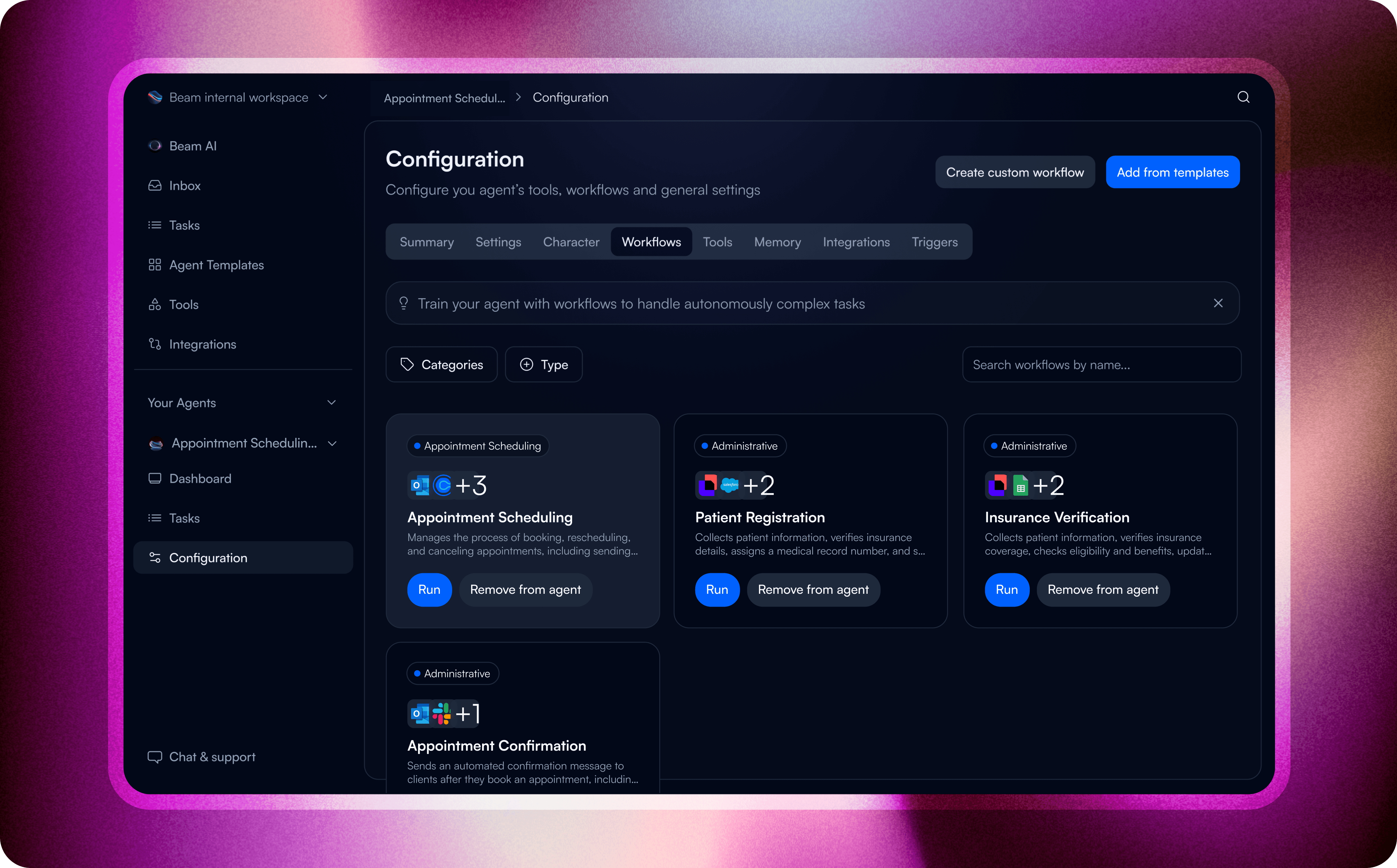

The appointment scheduling workflow automates the process of booking appointments, sending confirmations, and issuing reminders to participants. It helps prevent scheduling conflicts and ensures smooth communication with stakeholders.
By adopting AI agents for appointment scheduling, businesses can organize booking processes more efficiently and provide timely notifications to participants. Leveraging agentic process automation saves time, reduces no-shows, and enhances customer satisfaction. This workflow is particularly beneficial for industries such as healthcare, customer service, and professional services.
Accurate and efficient appointment scheduling is essential for improving customer experience and optimizing resource allocation. Automating this workflow ensures organized and reliable bookings.
Here are some use cases where this workflow can be applied:
Appointment Scheduling is owned as a bounded operational process: it begins with an approved request and ends only after the result, status, and required follow-up are recorded.
Trigger
Appointment Scheduling starts when the operations owner receives a qualifying request or record for this process. The workflow proceeds after the data and access needed to retrieve participant availability from integrated calendars are available.
How it works



Inputs and connected systems
Required inputs include the source request or record, the documents and fields needed to retrieve participant availability from integrated calendars, the reference data used by later validation steps, and approved access to each destination system.
Human decisions and exceptions
The Operations owner reviews missing information, policy exceptions, low-confidence results, and any action that changes the final scheduling & coordination outcome. Approved cases continue; rejected cases return for correction or manual handling.
Controls and audit considerations
Appointment Scheduling should use least-privilege access, required-field validation, auditable decision and write logs, and a stop condition when data is missing or confidence is below the approved threshold. The process owner defines retry, escalation, privacy, and rollback rules before release.
Outputs and stopping point
The workflow ends when this final action completes: Confirm the appointment and send details to all participants. It writes the validated result to the approved system of record, records the outcome, and notifies the responsible owner when follow-up is required.



استكشف حالات الاستخدام الأخرى
تصفح حالات الاستخدام الأخرى الخاصة بنا