
By submitting, you consent to our use of your data. Privacy Policy.
Category
استراتيجية العمل
Share the article
سوق تعهيد عمليات التوظيف (RPO) يتضاعف — لكن معظم المؤسسات تفوتها الصورة الأشمل
يمر سوق تعهيد عمليات التوظيف (RPO) بتحول كبير لم تتوقعه سوى قلة من المؤسسات. بعد أن بلغت قيمته 45 مليار دولار في عام 2024، من المتوقع أن يصل السوق إلى 82.73 مليار دولار بحلول عام 2033، بمعدل نمو سنوي مركب يبلغ %7.08 يعيد تشكيل الطريقة التي تفكر بها المؤسسات في استقطاب الكفاءات.
لكن القصة الحقيقية لا تكمن في الأرقام وحدها، بل في ما يحركها: الأتمتة المدعومة بالذكاء الاصطناعي، وضغوط التكلفة، والتحول الجذري في كيفية تعامل المؤسسات مع التوظيف على نطاق واسع.
بالنسبة للشركات التي لا تزال تدير عمليات التوظيف داخلياً، فإن هذا النمو يشير إلى أمر مهم: لقد قال السوق كلمته، وعملاء الذاء الاصطناعي (AI agents) للمؤسسات يعيدون تشكيل اقتصاديات التوظيف.
إليك 7 طرق يغير بها هذا التحول عمليات التوظيف في المؤسسات — وما يمكنك فعله حيال ذلك.
1. معادلة التكلفة تغيرت بشكل جذري
تشير التقارير إلى أن المؤسسات التي تتبنى حلول تعهيد عمليات التوظيف (RPO) تحقق توفيراً في التكاليف يتراوح بين 20 إلى 40 بالمئة مقارنة بعمليات التوظيف التقليدية الداخلية. هذا ليس توفيراً هامشياً، بل هو تحول جذري للشركات التي توظف بمعدلات مرتفعة.
يأتي هذا التوفير من مصادر متعددة:
دمج التكنولوجيا: يقوم مزودو خدمات RPO بتوزيع استثمارات الذكاء الاصطناعي والأتمتة على مختلف العملاء
كفاءة العمليات: يسهم توحيد سير العمل في تقليل الوقت اللازم للتوظيف بنسبة %25 في المتوسط
تقليص النفقات العامة: انتفاء الحاجة إلى الاحتفاظ بفرق توظيف داخلية ضخمة خلال فترات الركود في التوظيف
وفقاً لـ تقرير السوق لعام 2026 الصادر عن Strategic Revenue Insights، يكثف مزودو خدمات التوظيف استثماراتهم في المنصات القائمة على الذكاء الاصطناعي — وتستجيب المؤسسات لذلك باستثمار ميزانياتها فيها.
2. الذكاء الاصطناعي بات من أساسيات خدمات RPO اليوم
لقد أدى دمج الذكاء الاصطناعي في أنظمة تتبع المتقدمين، وفحص السير الذاتية، ومطابقة المرشحين إلى تغيير جوهري في ما يمكن لمزودي خدمات RPO تقديمه. وتشمل القدرات الرئيسية الآن ما يلي:
الفحص الآلي للسير الذاتية الذي يعالج آلاف الطلبات في غضون دقائق
مطابقة المرشحين بالذكاء الاصطناعي التي تحدد المواهب الأكثر ملاءمة بناءً على المهارات والخبرة ومؤشرات الثقافة المؤسسية
روبوتات الدردشة والمساعدون الافتراضيون الذين يتولون التواصل مع المرشحين على مدار الساعة
لوحات تحليلات البيانات الفورية على المنصات السحابية
هذه ليست قدرات مستقبلية، بل هي من أساسيات خدمات RPO الحديثة. والمؤسسات التي لم تتبنَّ الأتمتة المعتمدة على الوكلاء الذكيين (agentic automation) المماثلة في عملياتها الخاصة تجد نفسها تدريجياً في موقف تنافسي ضعيف.
62% من أصحاب العمل يفيدون بأن المنصات المدعومة بالذكاء الاصطناعي ساهمت في تقليص دورات التوظيف بمعدل 21 يوماً.
3. نقص المواهب يسارع وتيرة الاستعانة بالمصادر الخارجية
إن هذه الطفرة في سوق RPO لا تحدث من فراغ، بل ترتبط مباشرة بأزمة المواهب العالمية. فوفقاً للأبحاث القطاعية، واجه %77 من أصحاب العمل عالمياً صعوبات في شغل الوظائف في عام 2023 — وهو أعلى مستوى يسجل منذ 17 عاماً.
عندما يصبح البحث عن الكفاءات أمراً صعباً، تحتاج المؤسسات إلى كل ميزة ممكنة. ويقدم مزودو خدمات RPO:
الوصول إلى قواعد أوسع من المواهب من خلال الشبكات القائمة والمترابطة
خبرة متخصصة في الوظائف التي يصعب شغلها
المرونة في التوسع خلال فترات ذروة التوظيف دون زيادة دائمة في عدد الموظفين
هذا هو السبب وراء تسارع وتيرة تبني حلول الموارد البشرية المدعومة بالذكاء الاصطناعي — فهي تحل نفس المشكلات التي تعالجها خدمات RPO، ولكن مع قدر أكبر من التحكم والسيطرة للشركات.
4. اختلافات واضحة بين الأسواق الإقليمية
إليك ما يغفله معظم المحللين لسوق RPO: النمو الأسرع لا يتركز دائماً في أكبر الأسواق حجماً.
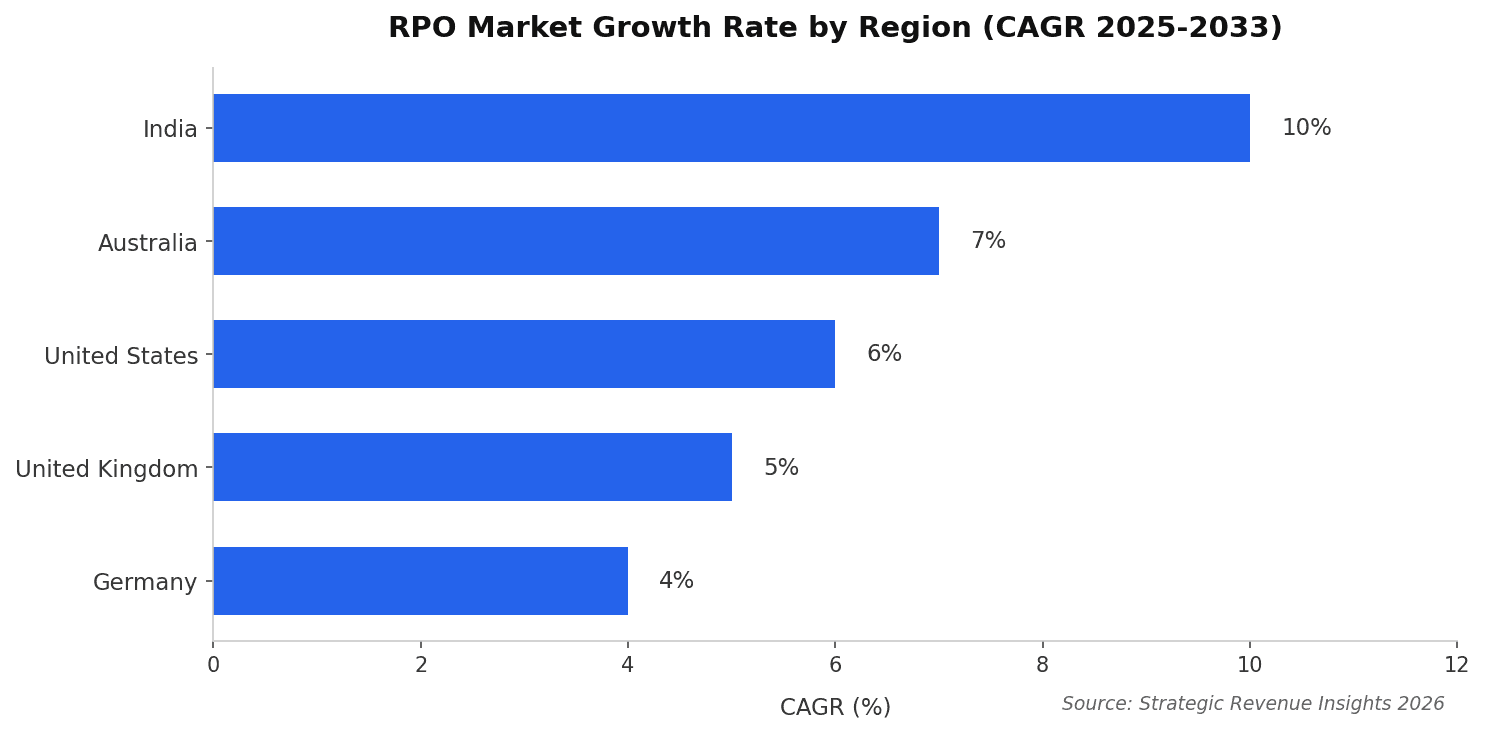
المصدر: Strategic Revenue Insights، تقرير سوق RPO لعام 2026
يشير معدل النمو السنوي المركب في الهند والبالغ %10 — وهو ما يقارب ضعف المعدل في الولايات المتحدة — إلى الوجهة التي يتجه إليها الابتكار في خدمات RPO. وبينما تظل أمريكا الشمالية وأوروبا أكبر الأسواق من حيث الحجم، فإن منطقة آسيا والمحيط الهادئ هي المركز الفعلي للنمو المتسارع.
ماذا يعني هذا للمؤسسات:
التوسع في منطقة آسيا والمحيط الهادئ؟ يصبح مزودو خدمات RPO الذين يتمتعون بخبرة إقليمية شركاء استراتيجيين وليس مجرد موردين خدمات
احتياجات توظيف عالمية؟ تميل الجدوى الاقتصادية لصالح المزودين القادرين على العمل في الأسواق الناشئة ذات النمو المرتفع والأسواق الناضجة في وقت واحد
تعقيدات الامتثال التنظيمي؟ بالنسبة للشركات التي تتابع لوائح وقوانين الذكاء الاصطناعي في أوروبا، فإن تفويض الاستعانة بمصادر خارجية لشركاء ملتزمين بالامتثال يقلل من المخاطر
5. تحول قرار "التطوير الداخلي مقابل الشراء الجاهز"
يعكس النمو الهائل في سوق RPO توجهاً أوسع نطاقاً: حيث تفضل المؤسسات بشكل متزايد شراء الحلول والقدرات الجاهزة بدلاً من تطويرها محلياً. وهذا يتماشى تماماً مع ما نراه في جميع مجالات تبني الذكاء الاصطناعي في قطاع الأعمال، حيث توقفت %76 من المؤسسات عن تطوير الذكاء الاصطناعي داخلياً.
وبالنسبة للتوظيف على وجه التحديد، فإن الحسابات واضحة ومباشرة:
التطوير الداخلي: استثمار أولي ضخم، تكاليف صيانة مستمرة، قدرة محدودة على التوسع السريع، وتحكم كامل بالعملية
خدمات RPO / وكلاء الذكاء الاصطناعي: تكاليف بنية تحتية مشتركة، والجهة المزودة تتولى التحديثات، والتوسع حسب الطلب، ودرجات تحكم تختلف بحسب النموذج
النتيجة: تحصل المؤسسات على تكنولوجيا أفضل بتكلفة أقل — سواء من خلال مزودي خدمات RPO أو عبر منصات وكلاء الذكاء الاصطناعي الخاصة بهم.
6. النماذج الهجينة تكتسب زخماً متزايداً
ليست كل المؤسسات مستعدة للتعهيد الكامل لعملياتها. وتعتمد حالياً حوالي %42 من الشركات نماذج هجينة تجمع بين فرق الموارد البشرية الداخلية ومزودي خدمات RPO الخارجيين. ويقدم هذا الأسلوب:
الاحتفاظ بالتحكم والسيادة على قرارات التوظيف الاستراتيجية
إسناد التنفيذ الخارجي لعمليات التوظيف ذات الأحجام الكبيرة
المرونة في زيادة النطاق أو تقليصه بناءً على متطلبات العمل
تطبق المنهجية الهجينة ذاتها مع وكلاء الذكاء الاصطناعي: الحفاظ على دور العنصر البشري (human in the loop) في اتخاذ القرارات النهائية، مع أتمتة مهام الفحص المبدئي، والجدولة، والتقييم الأولي.
7. لا تحتاج للاستعانة بمصادر خارجية للحصول على مزايا RPO
إليك ما تغفله معظم تحليلات سوق الـ RPO: إن قدرات الذكاء الاصطناعي ذاتها التي تدعم نمو الـ RPO — مثل الفحص الآلي، والمطابقة الذكية، وتنسيق سير العمل — متاحة للمؤسسات مباشرة عبر منصات وكلاء الذكاء الاصطناعي.
تأمل هذه المقارنة:
مزودو خدمات RPO: يستخدمون الذكاء الاصطناعي لمعالجة الطلبات بمعدلات كبيرة، والتعامل مع تفاعل المرشحين على مدار الساعة وطوال أيام الأسبوع، وتقديم لوحات تحليلات البيانات
الوكلاء الأذكياء للمؤسسات: نشر وكلاء الذكاء الاصطناعي في مسارات عمل التوظيف الخاصة بك، وأتمتة الفحص والجدولة داخلياً، مع الحصول على رؤية كاملة لبياناتك الخاصة
الفرق تكمن في التحكم. فمن خلال أتمتة الموارد البشرية المدعومة بالذكاء الاصطناعي الخاصة بك، فإنك تحافظ على الإشراف المباشر على تجربة المرشحين، والبيانات، والعمليات — مع مواصلة جني مكاسب الكفاءة التي تدفع طفرة الـ RPO إلى الأمام.
الخلاصة
يروي مسار نمو سوق تعهيد عمليات التوظيف (RPO) من 45 مليار دولار إلى 82.73 مليار دولار قصة واضحة: تراهن المؤسسات بقوة على أتمتة التوظيف المدعومة بالذكاء الاصطناعي. وسواء كان ذلك من خلال مزودين خارجيين أو منصات داخلية، فإن عصر التوظيف اليدوي والمستندات الورقية يقترب من نهايته.
السؤال ليس ما إذا كان ينبغي أتمتة التوظيف، بل كيف نقوم بذلك، ومن يتحكم في هذه الأتمتة.